Matt D’Arcy found this article whilst researching some other material and it occured to him that it would serve as a nice introduction to people wondering what lies outside and around Vale da Telha…..
This entry was posted by the contributor ‘moveforward’ on July 30 2009 in the Cities & Towns section of the following website:
http://www.portugalforum.com/cities/aljezur-portugal-the-fertile-beachfront.html
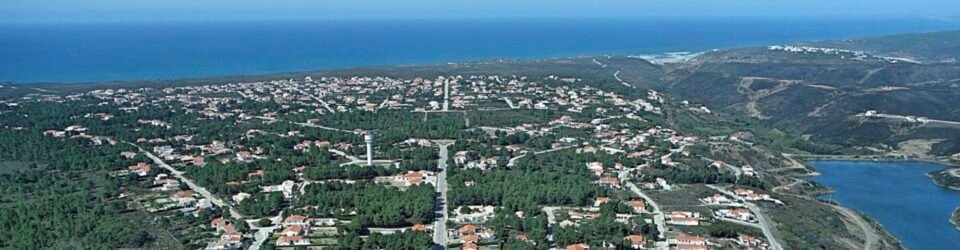
Vale da Telha sits on a plateau accessed via a wide well-surfaced hill road just three or four hundred metres before the N120 coastal road enters the small and historic town of Aljezur.
You can read about Vale da Telha, its facilities and its history in other articles here on the Amovate website.
But what lies outside and around Vale da Telha….?
This article should provide some useful information.
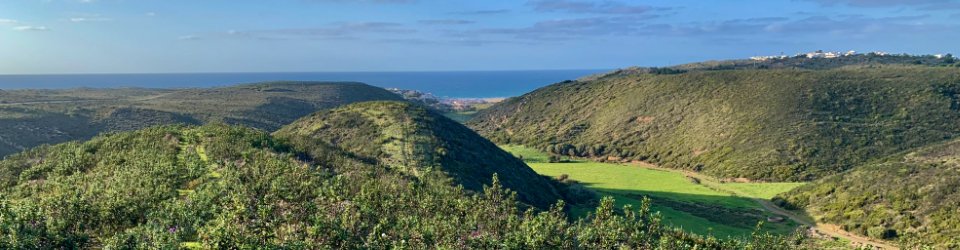
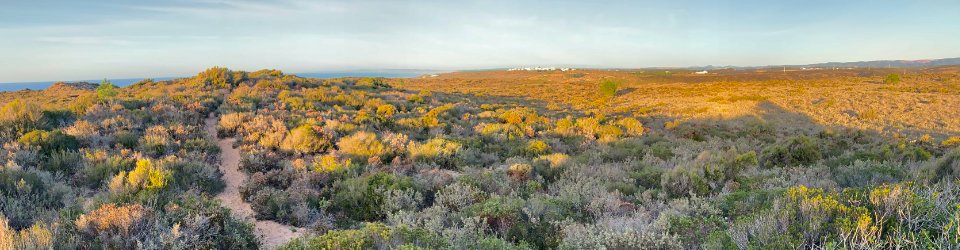
Aljezur is located at a distance of thirty kilometers north of Lagos in a fertile valley filled with greenery and vegetation.
The valley has long been known for its sweet potato crops as the rich land is fed by the river that cuts the area.
The old town is located on one side while the new town is on the other side.
The old town is built on a hillside, with the main street runs parallel to the river where there are many small cafes serving delights al fresco.

Aljezur Castle
A Moorish castle built in the 10th century is located high on the hill overlooking the old town with a full picturesque landscape.
Archaeological discoveries have confirmed that human had settlements in the area at about 4,000 BC. The oldest formally recorded civilization was established by the Romans, which was soon supplanted by the Moors who lorded over the area for six hundred years. In 1280, the town received its charter from the reigning King Dinis. The boundaries of the municipality are shaped as a rectangle delimited by the hills around it and the sea, making much of its landscape is greatly influenced by these two bodies. The coastal area is lined with high cliffs that nestle beach coves and untouched dunes. The inland is covered by rolling hills with receding vegetation lined up all in the row. In between these rows, vegetables, sweet potatoes and peanuts are grown over the centuries.
Largely untouched during the centuries succeeding this era, it is now one of the fastest growing areas in the 20th century.
All throughout its chequered past, agriculture was the main economic industry in the region. So overflowing was the produce that the farm products were shipped to the market via the port up the Aljezur creek.
Over time, siltation made the creek impassable to barges or boats and the road running down Lagos was used for economic traffic before the earthquake of 1755 caused much destruction and disease to the town.
But now tourism is bringing people and jobs back into the area.
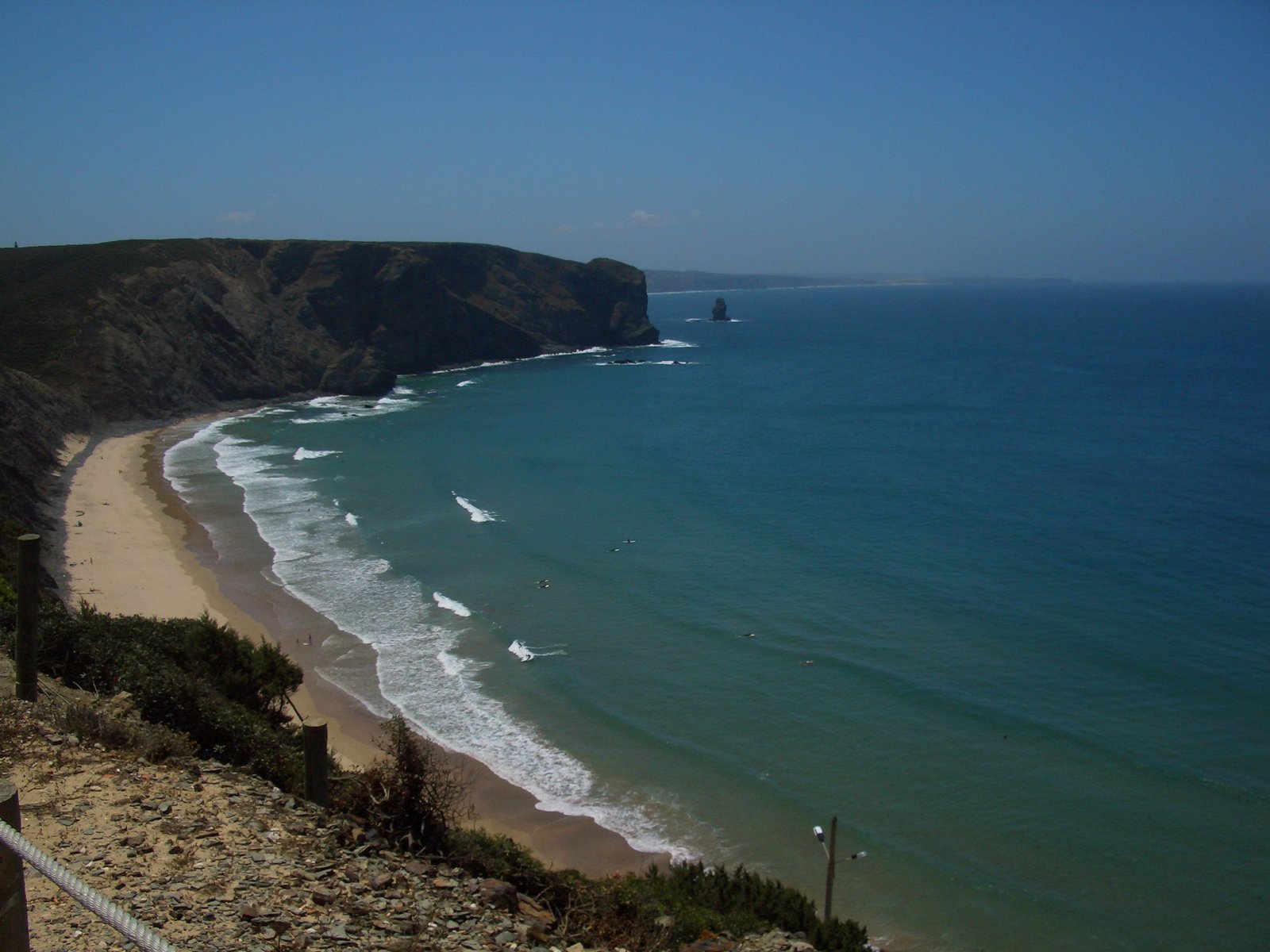
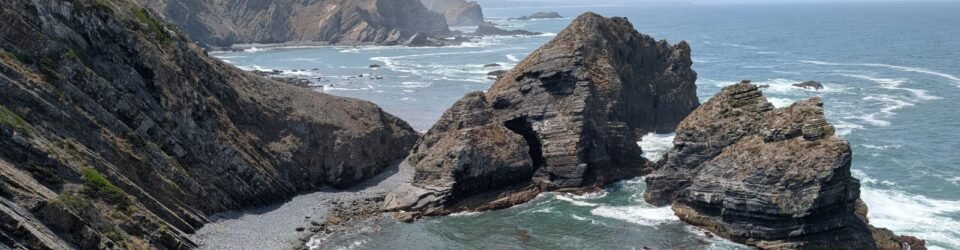
The beaches of Aljezur are the most breathtaking as the sea had carved the cliffs to make for the fine white sand

Surfers at Arrifana
beaches, those same Atlantic waves now creating a “must-do” destination for the most intrepid of surfers.
On the cliffs, many migratory birds have built nests amongst the many wild flowers.
The bays face the sun with the long strip of beach separating land from the sea. The following are some of the famed beaches of Aljezur.
Odeceixe is known for its long beach cut by the mouth of the Seixe creek. There is a resort built near the mouth of the creek and is geared for great family fun. The resort provides the greatest views from the inland Miradouro da Ponta Branca.
The Quebrada beach is one of the least visited beaches as this small swath of sand is hugged by the sea and the cliffs. Some of the other virgin coves are the Samouqueira, Vale dos Homens and Carriagem.

Amoreira
The Amoreira and Monte Clerigo beaches are twin beaches separated by rock formations

Monte Clérigo Beach
that lead up to Ponta da Atalaia or Lookout Point.
Arrifana Beach is a fishing hamlet with a long stretch of sand sheltered by cliffs.
This area is best attributed to the Moorish prince Ibn Caci in the 12th century. He lived in the area as a recluse while writing poetry.
There are also the remains of a fort built in the 17th century to protect the village.

Remains of the Fort at Arrifana
The Pedra da Agulha (stone needle) is located in this area and is a magnificent sight to behold.

Pedra da Agulha
The most well known beach in the Aljezur is Bordeira. The beach’s name comes from the Ribeira da Bordeira, which flows into the southern end of this swatch of sand.
There is a fort built in the 17th century to protect the bay from marauding pirates,
and also a small headland named as Pontal that provides the best view of the surrounding beaches.
There is also a large deposit of fossils from the Mesozoic era and can be reached by the use of a wooden footbridge over the stream.
Aside from enjoying the beach, there is a whole host of activities that can be enjoyed in Aljezur.

Fishing hamlet at Arrifana
Sports anglers can rent boats for the day and be hopeful of landing big game fishing in the area. The waters are overflowing with many species of fish such as sea bass, conger eels, snook, sea bream and dory.
The famed fishing grounds of Aljezur are Baia dos Tiros, Esteveira, Samouqueira, Vale dos Homens, Carriagem, Fonte Sala, Pipa, Vale Figueiras, Canal, Atalaia, Bordeira, Pontal and Amado.
You can also enjoy the waves and go surfing or body boarding as the waters in and around Aljezur are among the best in Europe.
There are also many historic sites in Aljezur. Lying atop the hill, the castle foundations have seen much conflict between Christians and Moors over the centuries. The castle was built in the 10th century by the Moors with a large courtyard surrounded by high walls punctuated by two towers. The castle was badly damaged during the great earthquake of 1755. Another historic site is the Fonte des Mentires or Fountain of Lies. It was called such because of its association with a beautiful Arab woman and the taking of the castle.
There is also the Pillory, an area where criminals were paraded in front of the townspeople to be scorned and humiliated. There is also the Misericordia Church, a church rebuilt twice, first in the 16th century and then again the 1755 earthquake. The doorway is in the Renaissance with a fraternity table.
 The Main Church of Aljezur was completed by the end of the 18th century and stood as the centre of the Igreja Nova area of the town. There are three main areas to the church with the magnificent main altar.
The church has a statue of the Nossa Senhora da Alva or the Lady of Daybreak made in the 18th century. Many of the religious images and artifacts come from the old church that was destroyed in the 1755 earthquake.
The side chapels are from the Nossa Senhora do Destiero or Our Lady of the Exile from Monchique. The baptismal font is in the Manueline style of the 16th century with crucifixes from the 18th century.
The finest treasure in the Church is a Eucharist box made of mother of pearl and gothic chalice, all housed in the Church’s ostensorium.
The municipality of Aljezur is a fascinating mix of the old and the new. Its natural surroundings and historic sites are must see places to be in, as one enjoys the development of the modern Portugal.




 Calling all Aljezur Anglers!