Category Archives: Features

Still Time to Donate Cups / Mugs !!

We have had the following mail from Michelle Cassar who is trying to collect mugs & cups for use at local events, in an effort to reduce the “Sea of Plastic” which is usually left behind afterwards.

Just to let you know.  So far people have kindly donated 17 mugs for this Sunday´s Arrifana Sunset Fest.  So they will cover some of the musicians…  We need more!  There is still a few days to drop them off. & there are still FREE TICKETS AVAILABLE!

& don´t forget, bring your own mug on the night for A FREE Sagres.

The 123 sent me a PDF of the article that was in last weeks paper, for anyone who missed it in the shops & would like a look.

I have seen another event happening in Vale Da Telha later in the month, I will chat to the organisers & hopefully these mugs will make their way there after. So they could save many many plastic cups… With thanks,

Michelle

To view the PDF from the 123 and read more about Michelle and her work, please click on 123 Article


July 2011 Interview with Sargento Gabriel

A lot of people have been expressing their concern about noisy summer rentals disturbing their peace and quiet, raising the question of how best to integrate a close-knit community that is both residential and tourist-based.

Those of us who live here all the year round suddenly find ourselves invaded over eight or 10 weeks in the height of the tourist season, and find their ‘new’ neighbours partying until 6 or 7am, or singing through the wee small hours on the karaoke machines they bring with them.

One resident said the villa next door to them is invaded each summer by three families including a host of children, their rotweiller and their beloved karaoke, adding: “It is six weeks we dread all year round.”

The general theme—and the heartfelt plea—is “can we do something about it?”

Well, yes, you can! You CAN make them stop!

Amovate raised the issue with Aljezur GNR Commandant Sargento Gabriel Reis in our quarterly briefing with him. He was quick to reassure Vale da Telha residents—in fact, he is one of us, and appreciates the problem at first hand—that the GNR WILL act swiftly on any problems brought to their attention.

Sargento Gabriel said: “The fact is people—whether they live here or are here on holiday—cannot create the kind of noise and disturbance being talked about and it is important the residents with that kind of problem call us immediately.

“If you ring us at the police HQ on 282 998 130—the station is manned 24 hours a day, seven days a week—we will send a patrol to the house in question and tell them to shut down the music or the noise.

“They can play music only until 10pm, and even then only at a level so as not to disturb the neighbours.

“If the music is too loud even at 8pm we can send a patrol to quieten it.

“If we have to go back again to any house for the same reason the people committing the offence can then be fined.”

It is worth pointing out that before anyone rings the police they should assure themselves the noise pollution they are suffering at that moment is not just a brief interlude, and instead looks well set to go on for hours.

In order words, don’t get egg on your face by ringing the GNR then finding the music stops before they get there and the neighbouring—and offending—house has become as quiet as the grave!

Sargento Gabriel went on, with a quiet smile: “One of the problems is that people going on holiday and getting a welcome break from working all year or from their daily activities seem to feel that they have now moved outside normal life and arrive here feeling they can do everything they wish.

“Well, they cannot. They have to continue to live within the normal boundaries and to respect their neighbours.

“We spend all year in beautiful peace then the tourists arrive in July and August and suddenly it seems impossible live in Vale da Telha. But it isn’t and it shouldn’t be.

“If you have these problems, ring us and we’ll tackle them as quickly as possible.”

Summer, and the infusion of hundreds of outsiders, of course can bring other problems and Sargento Gabriel says villa owners should be very aware of an increased risk of opportunist theft.

He says reassuringly that, whilst individual victims do feel terribly upset and perhaps even violated when it happens to them, burglaries and thefts from houses in the Aljezur area are a minor problem.

But, still, people should not relax their vigilance.

He said: “In the summer when people tend to live outside a lot more, eating, drinking, reading by their pools, and swimming a lot more, they do tend to leave doors and windows open at the far side of the property.

“It is important that if, for example, you are relaxing outside, any doors and windows not in your line of sight, should be secured.

“And through the night, if you feel you need to leave windows open for ventilation make sure your shutters, if you have them, are secured.”

Thefts from cars are also a minor problem in this area, but they can occur when the beaches and car parks are packed during the summer months.

“Carrapateira is the biggest problem area in this respect, as cars tend to be parked on the cliffs overlooking the beach, or in car parks away from the beach and are therefore more vulnerable to sneak thieves,” the sergeant went on.

“Monte Clerigo and Arrifana usually only record two or three such instances a year and Amoreira perhaps five or six.

“But, while it is not a major problem, you can still become a victim, so it is important to take care when you drive to the beach. It goes without saying that you should not leave any valuables at all in the car, not just to put them out of sight.

“Opportunist thieves tend not to break into cars where they cannot see anything of value. But there are exceptions to the rule and once a thief has broken or forced a window and got into the car they can then open the boot and take any valuables left there.

“So take only what you need on the beach, and don’t leave any of that in your vehicle.

“And of course, while you are relaxing on the beach make sure that when you go away from your ‘base camp’, to swim or maybe to go and buy a drink or ice cream, at least one person always stays behind to guard your belongings.”

Sargento Gabriel also advises you not to leave personal effects like your driver’s licence and passport in your glove compartments.

“When you go out in your car within the Aljezur region you can carry a copy of your licence and your passport, which will service as identification should my officers stop you,” he said.

“That will be sufficient in this area, although other areas may want to see the original documents.”

On other matters Sargento Gabriel points out there is now a new car park, with 200 spaces, behind the market at the bridge in the town.

And a road behind the new Intermarché Supermarket will, once it is opened, become one-way to avoid congestion. For clarification this is the road where the ACCT Charity Shop was located before its move to the high street.

Some people have also been asking about the question of dog leads, having heard that a new law may require a full chest harness rather than a simple lead attached to your dog’s collar.

But Sargento Gabriel says this is not the case—the type of lead you use for your dog remains entirely your choice. All the law requires is that you keep your dog on its lead and not allow it to run free unsupervised, which IS an offence.

Aljezurense FC Presentation Night 2 July 2011

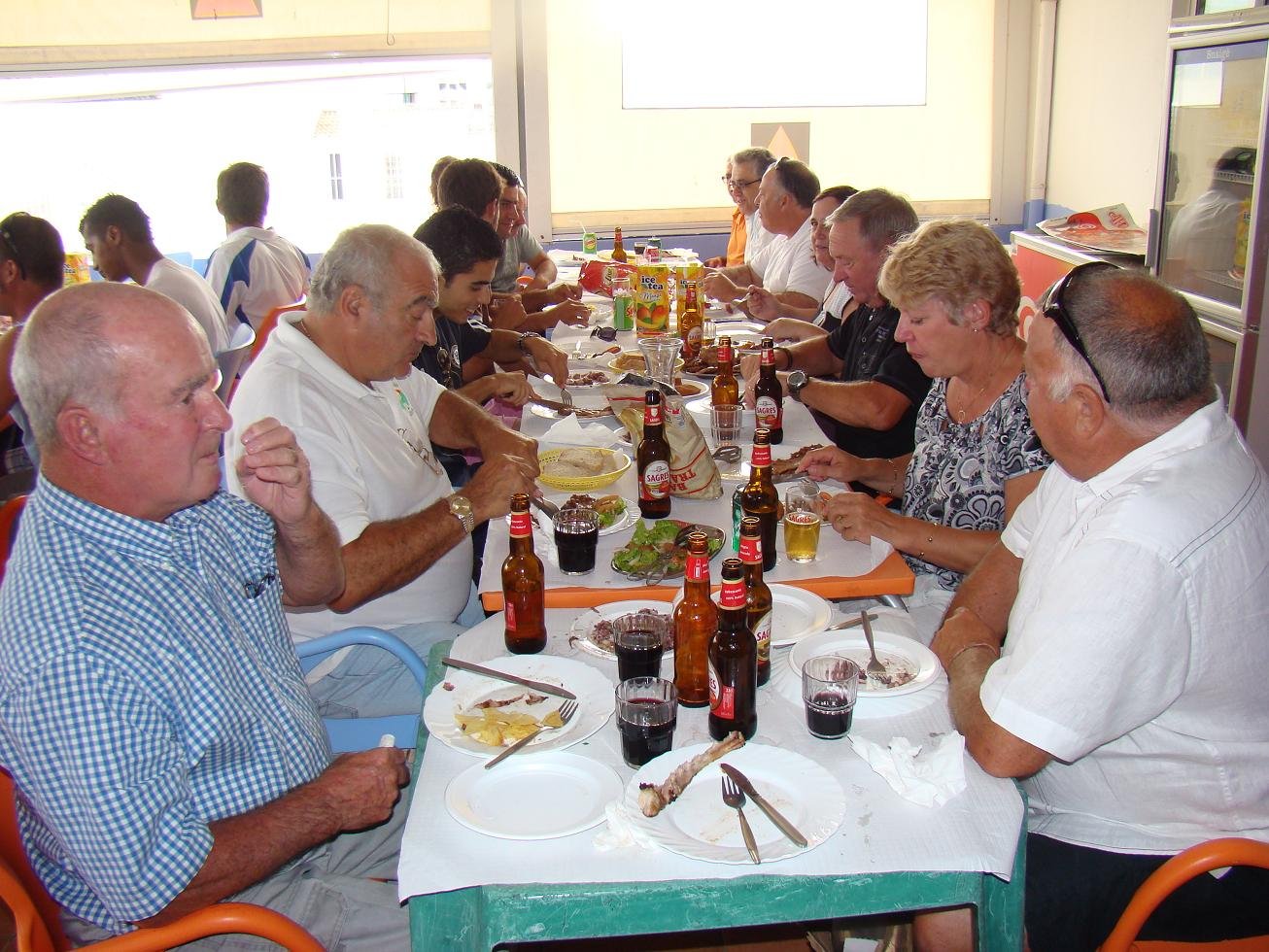
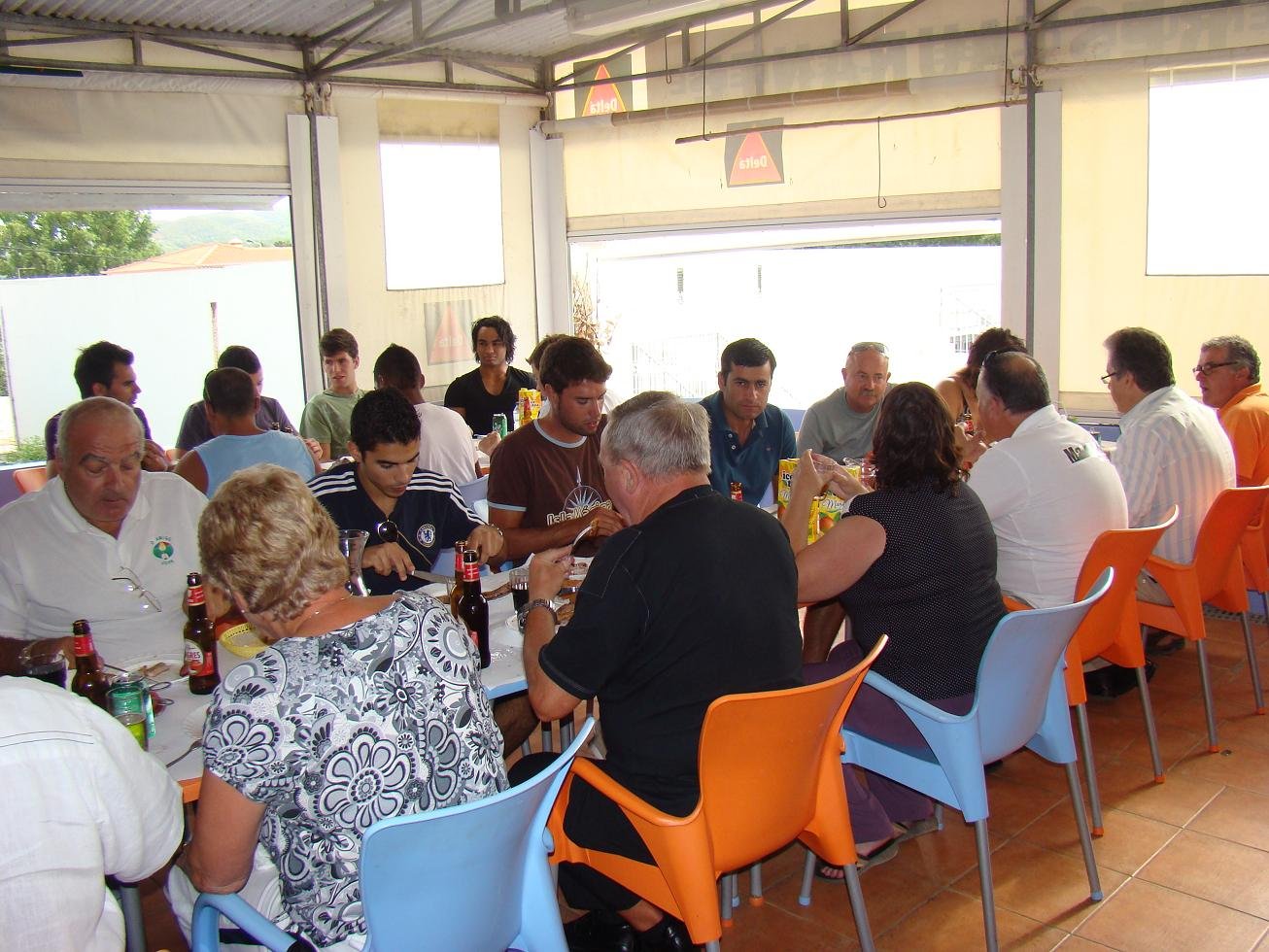
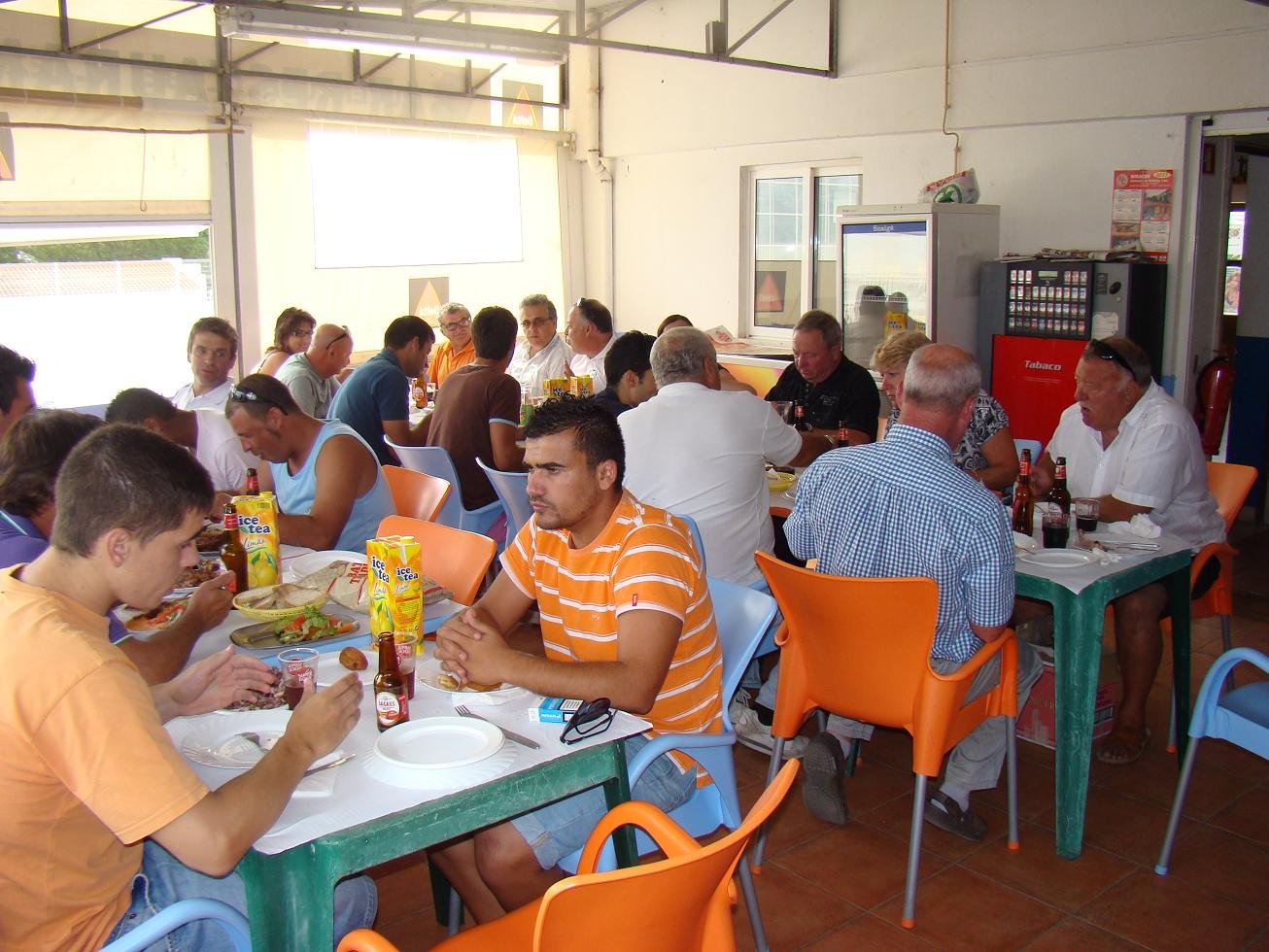
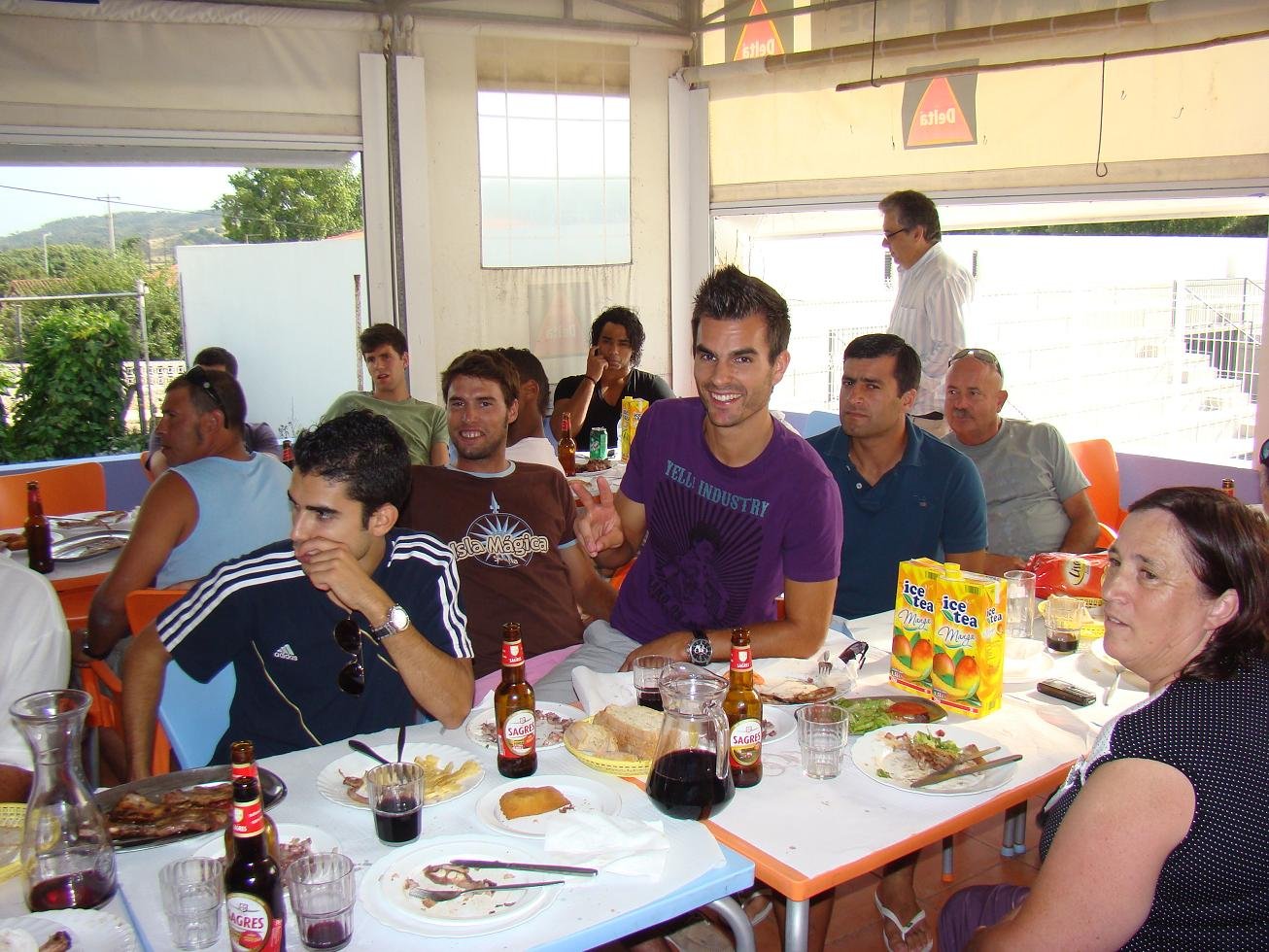
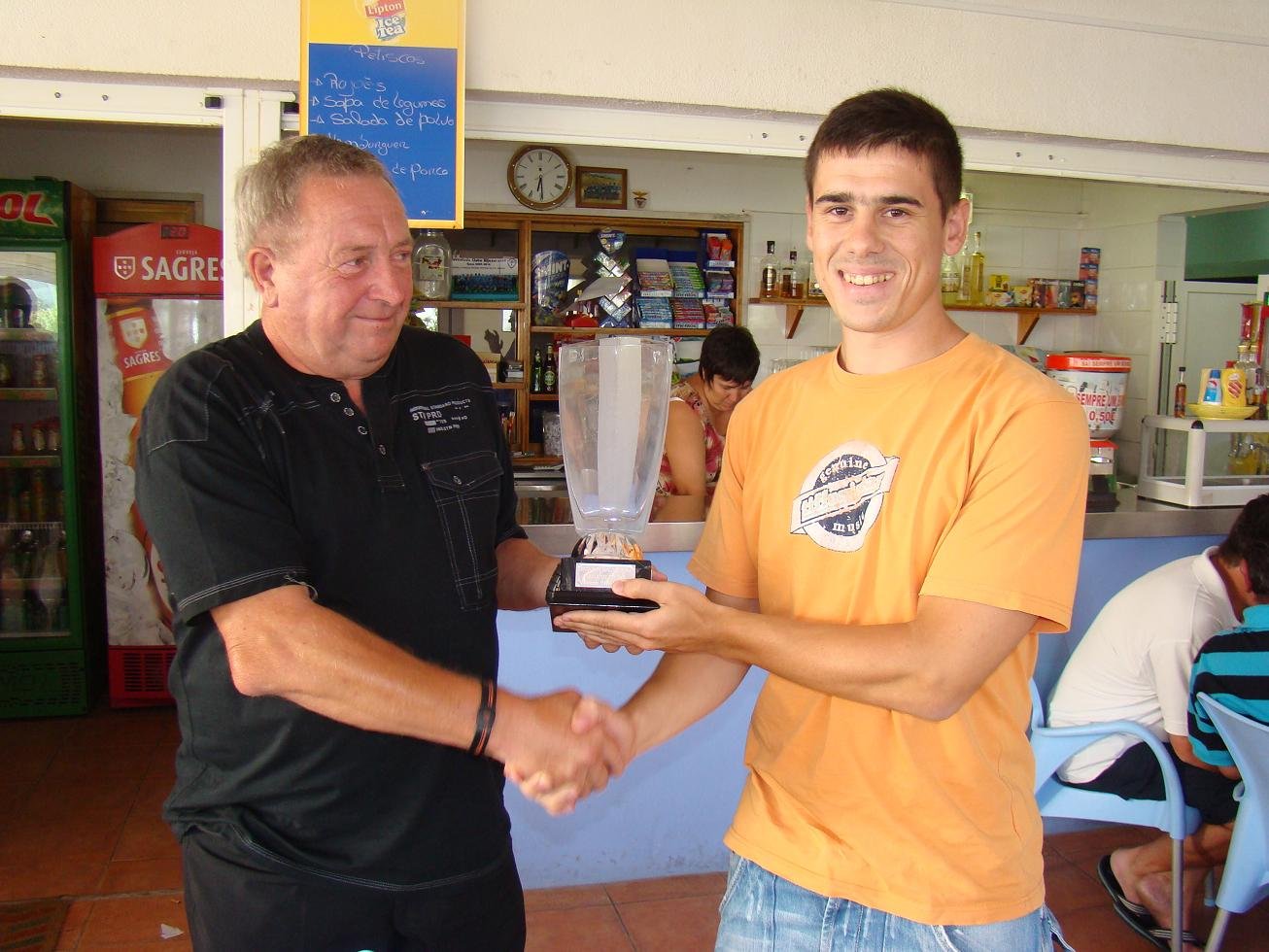
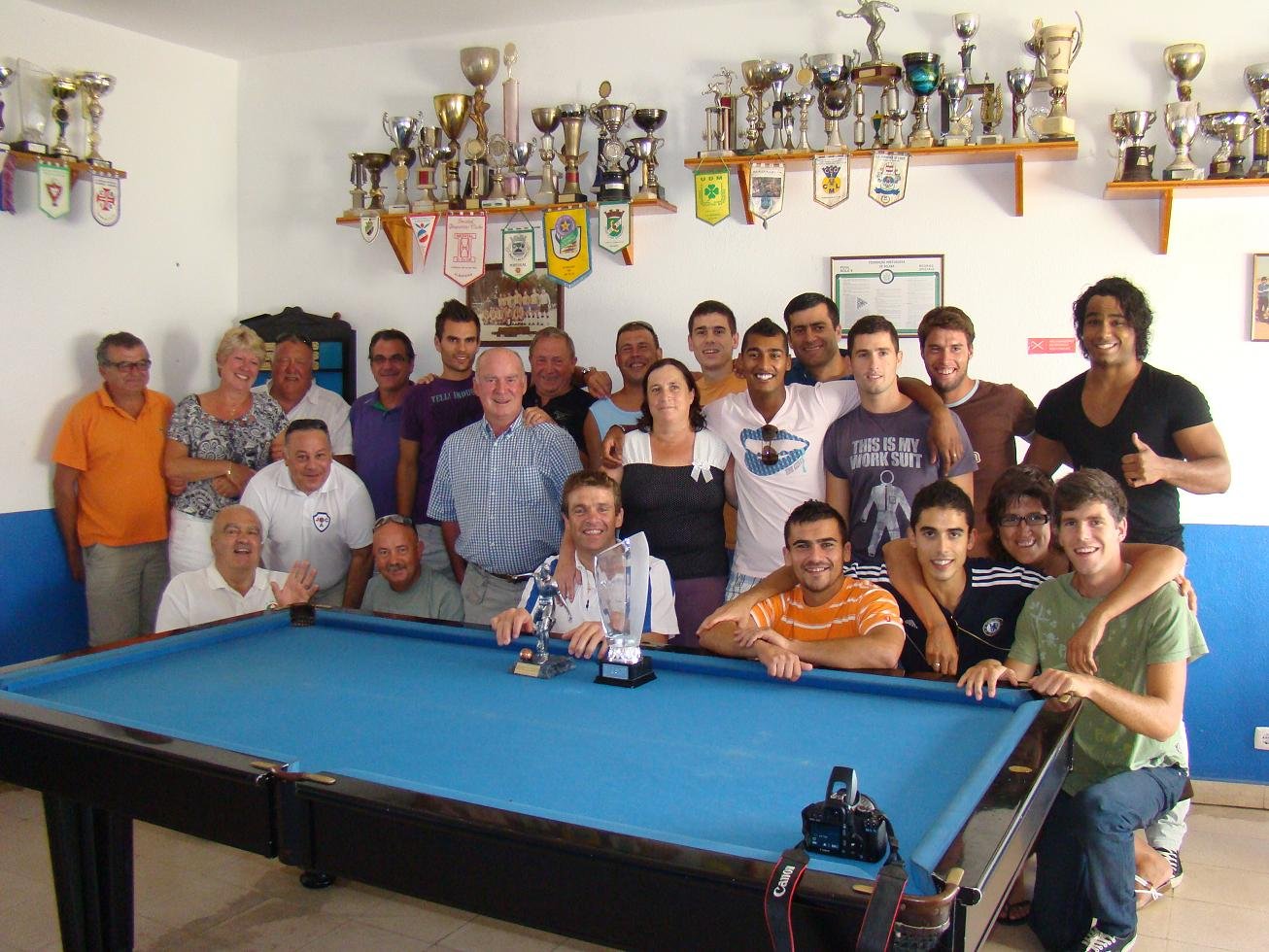
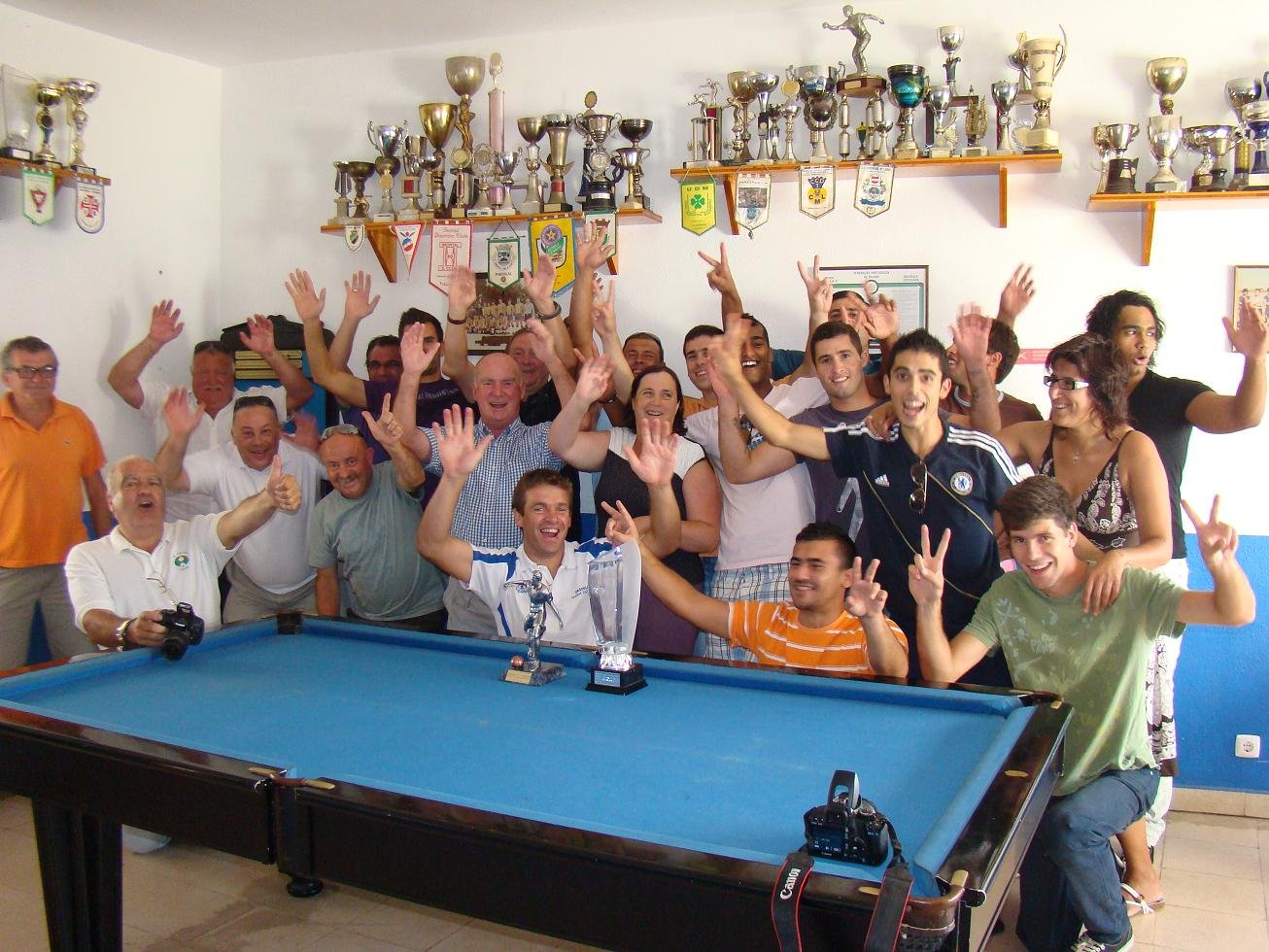
President Peter Johnson and fellow supporters were guests of Aljezurense FC this weekend to present Amovate’s Player of the Year trophy during the club’s annual dinner.

The manager, Luis Miguel Matos Correia, and players watched as Association secretary Ian Bedford made the eagerly-awaited announcement, naming goalkeeper Toco—Christiano José Catarino Toco—as the top player for the 2010-2011 season.

It is the third successive year that Amovate have presented the award, firming up our relationship with our local club.

Some of the regular supporters rarely miss a match home or away, a fact much appreciated by the players who usually come to the touchline at the end of each away game to applaud their presence.

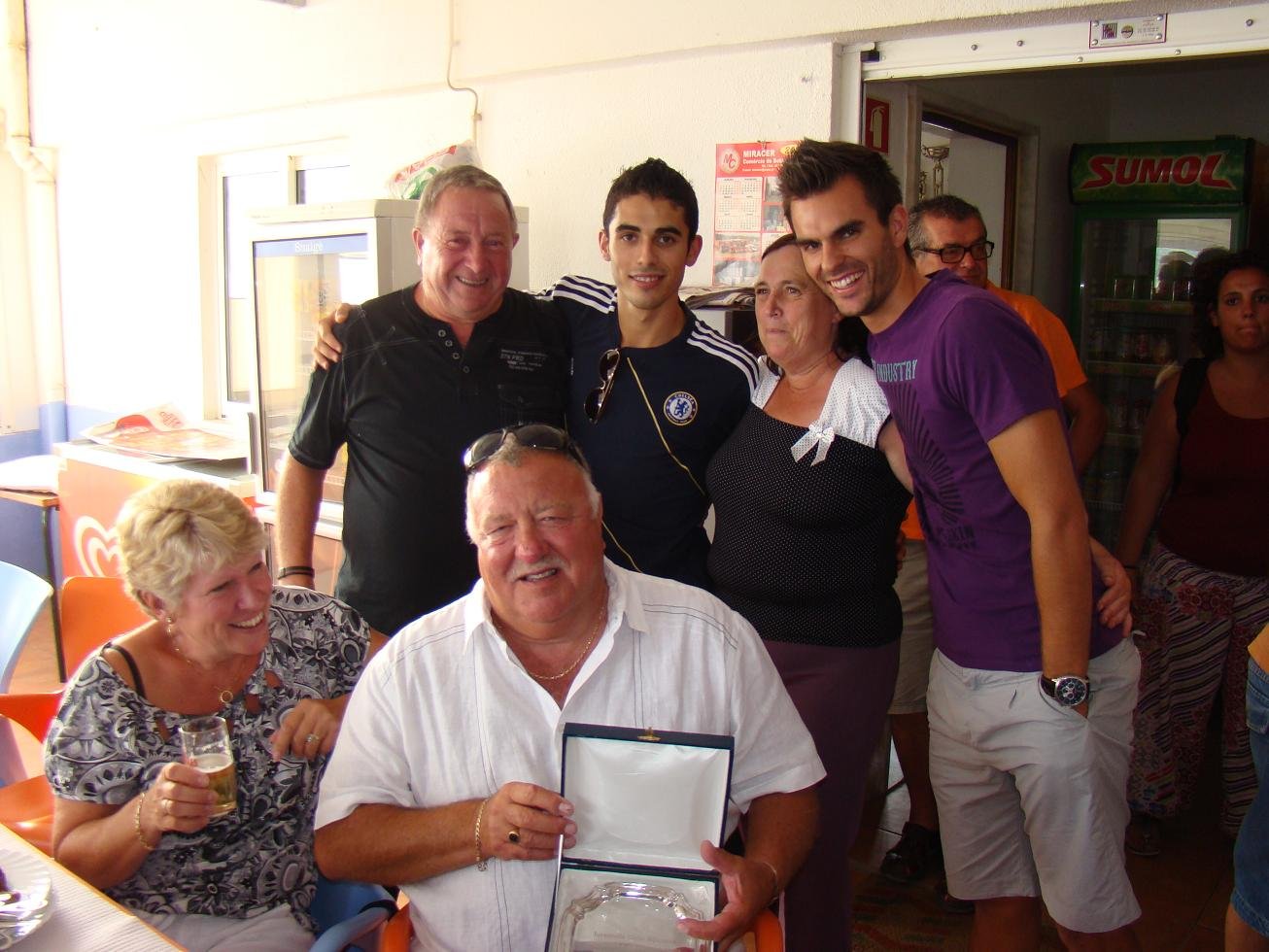
And at the end of the evening the club presented Amovate with a silver salver as a token of their appreciation for their ongoing support.

Three years ago, after learning that while the club had an annual Leading Goalscorer Award there was no nomination for a Player of the Year, Ian, his wife Sue—Amovate’s treasurer–and Peter asked for permission to donate such a trophy each season.

The club were delighted with the gesture, and since then the travelling ex-Pat support have held an annual end-of-season vote to name their outstanding player.

Guests at the Presentation

Apart from Ian, Sue and Peter, Vice-President John Bergstrom-Potter, PR Matt D’Arcy and Jack Beveridge were also invited to the dinner at the club’s Headquarters.

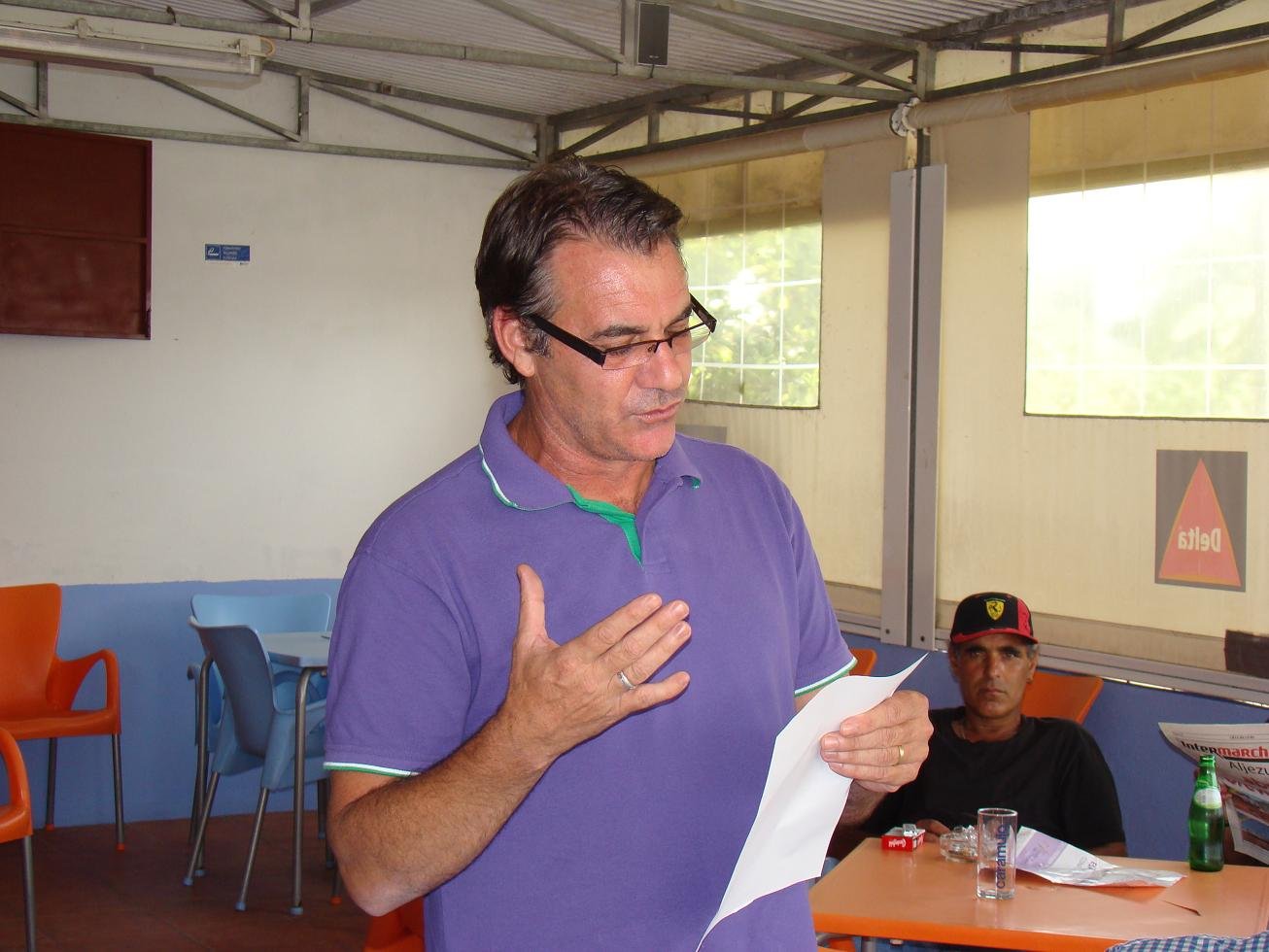
Ian, whose speech was translated by Coach Correia said it had been an “Almost” season for our local club, who ‘almost’ succeeded in remaining in the First Division.

But too much time bedding in new players, the difficulties adapting to a new coach before Correia’s welcome return to manage the side, and the loss of Toco through injury for the vital opening weeks of the season meant they were narrowly relegated.

But Ian added that with the arrival of young players like João Luis the team can rebuild on the experience of last season and promotion could once again be achieved with style.

He recalled that four players—Jorge, Lionel, Cocu and Toco—had all gained four or more Man of the Match votes during the season.

Christiano Jóse Catarino Toco

But the majority went to Toco and Jorge and after the final match the supporters cast their votes between these two men, with Toco narrowly emerging as the winner of the Player of the Year Trophy.

Toco was presented by Peter with the beautiful glass trophy that remains in the

possession of the club to be presented annually, and a second impressive trophy that is his to keep.

PROMS AT THE PARQUE

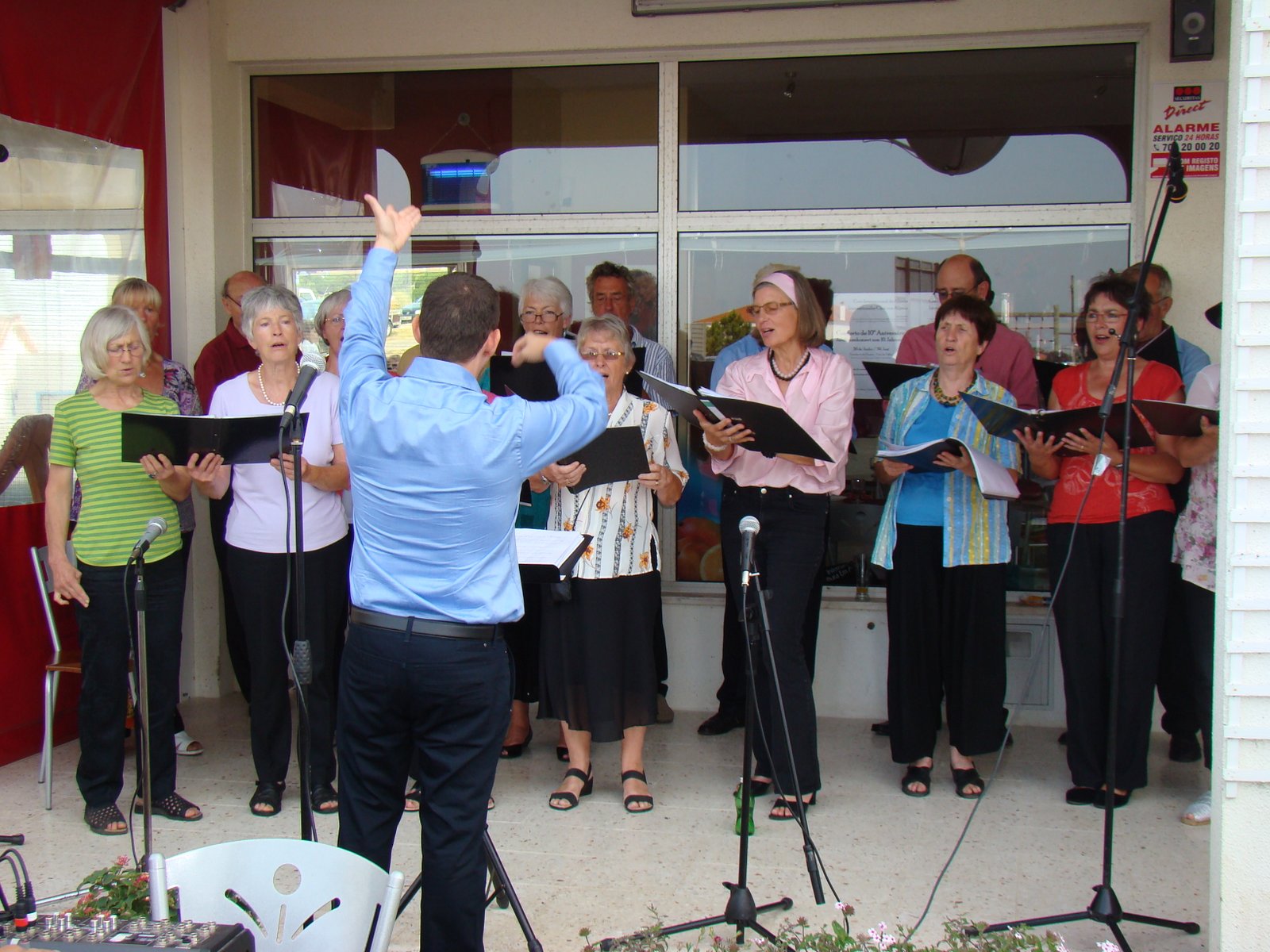
Aljezur International Choir

10th Anniversary Concert for Aljezur International Choir

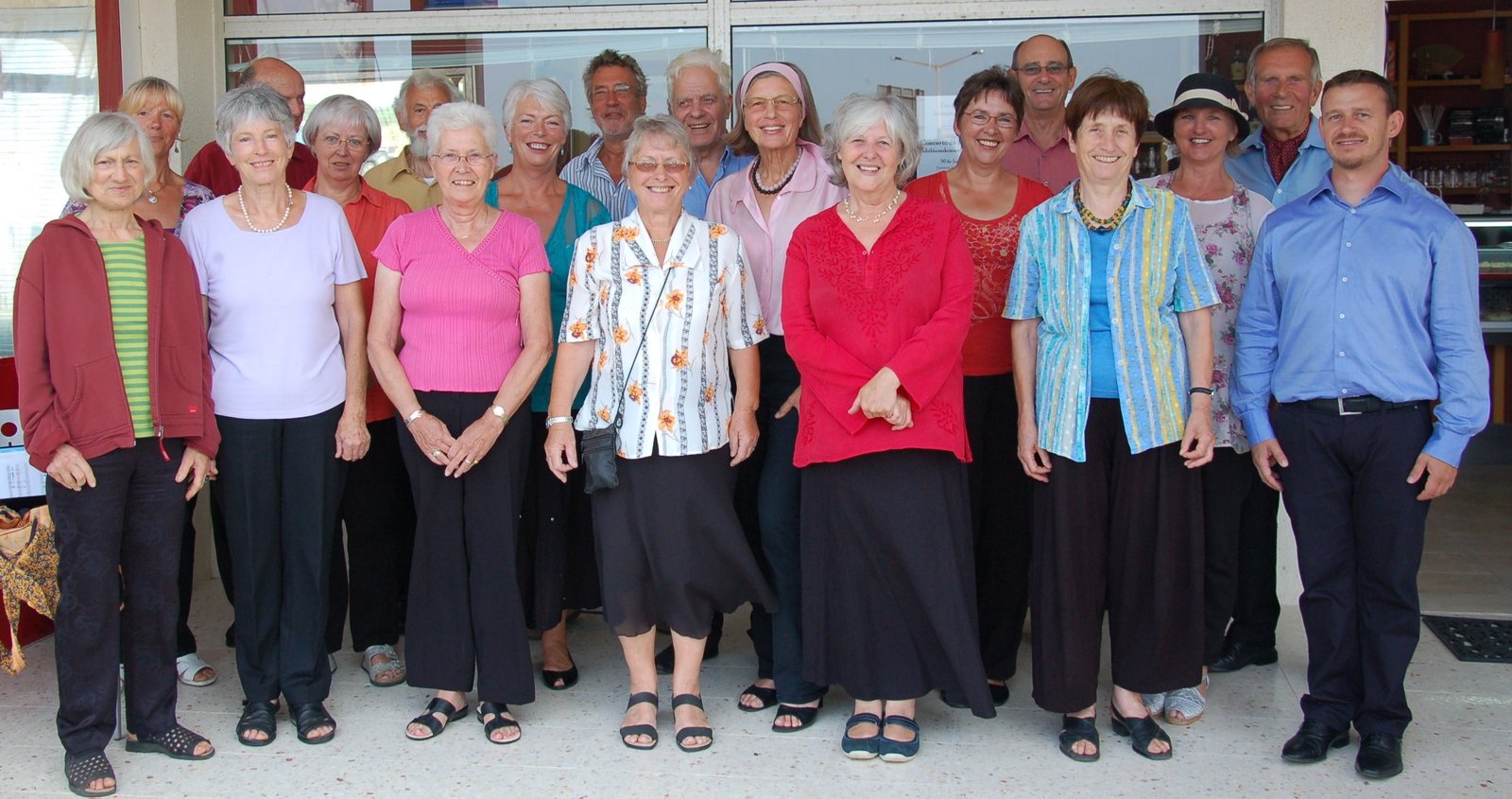
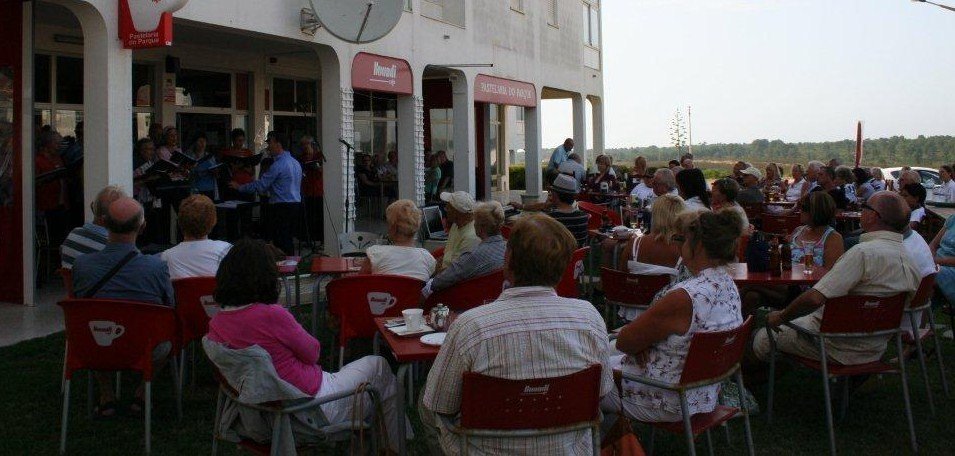
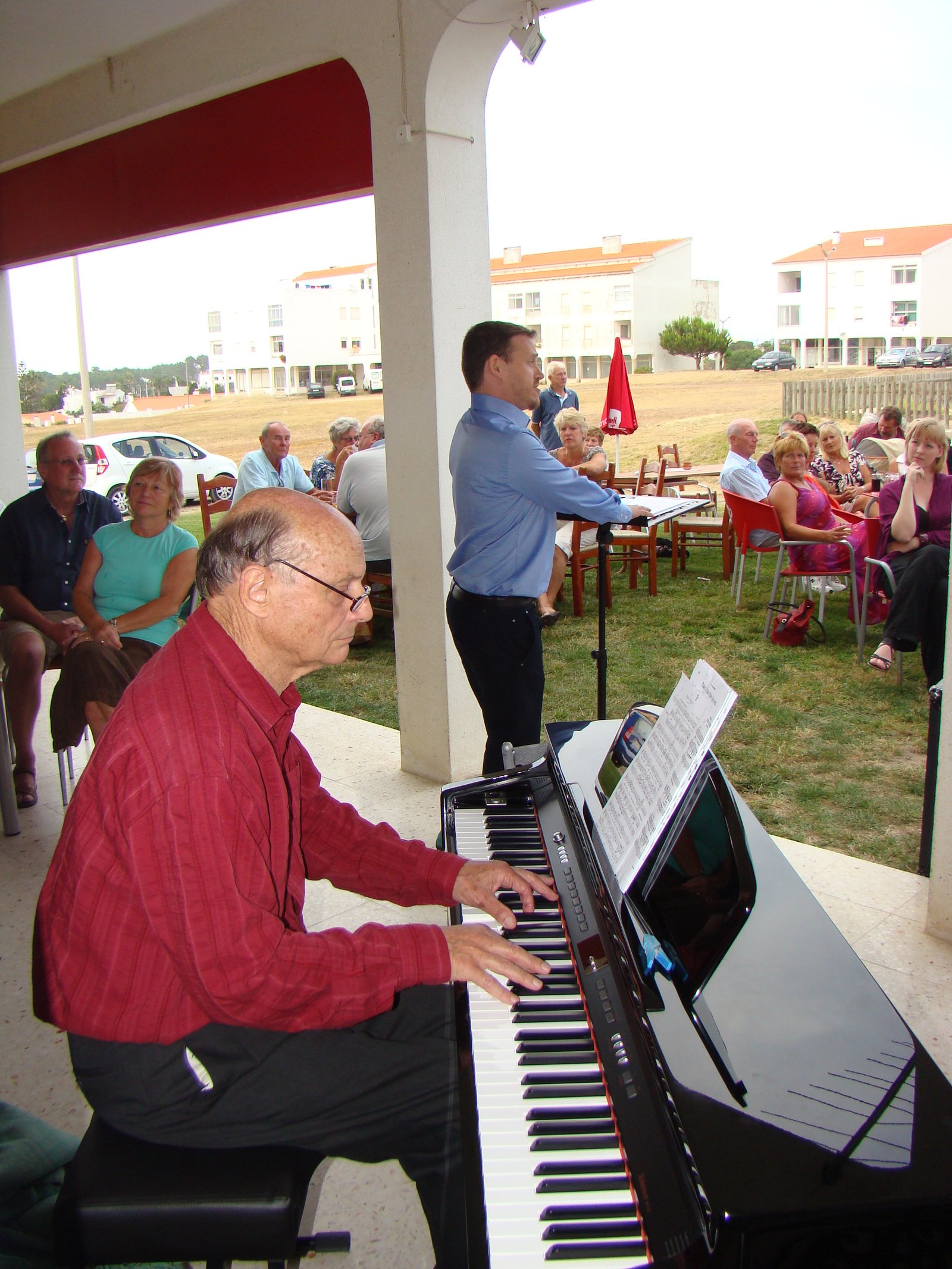
A choir that started life in the home of two people in 2001 celebrated its 10th anniversary with a free “Proms At the Parque” concert for an audience of more than 120.

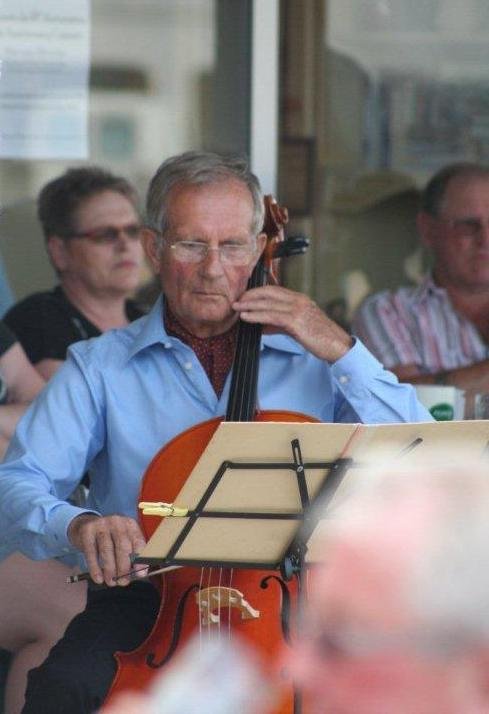
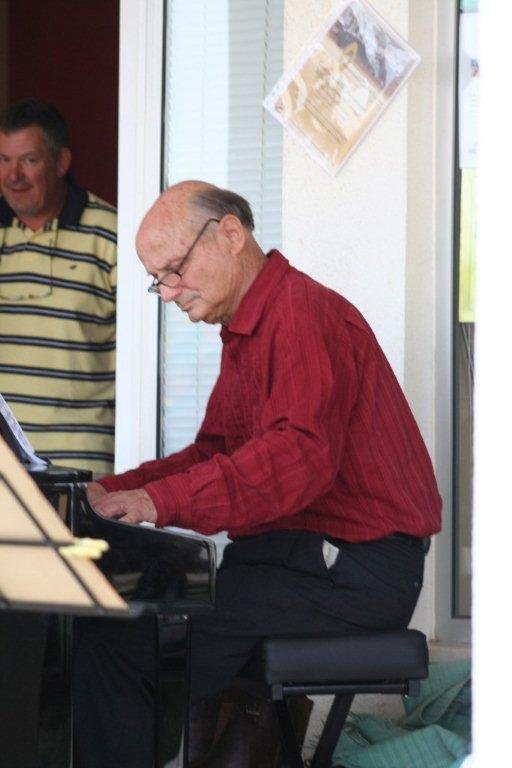
Coro International Aljezur, or the Aljezur International Choir, now has between 20 and 30 choristers plus musicians playing the violin, cello, piano, harp and trumpet.

The Choir has grown from the moment 10 years ago when Doris Wroblewski & Uwe Zelinsk posted handwritten notes asking for anyone who enjoyed singing to come to their home in Vale da Telha.

From those humble beginnings one of the Algarve’s leading choirs has grown to prominence across the region.

But they decided they wanted to go back to their roots to celebrate their 10th anniversary.

Organiser and Treasurer Trevor Herrington, who also sings bass and plays the trumpet, felt the Pastelaria in the Parque in Vale da Telha, a community just outside Aljezur with a large expat population, would be the perfect location, having held successful concerts there before.

And it is located not much more than a kilometre from Doris and Uwe’s home.

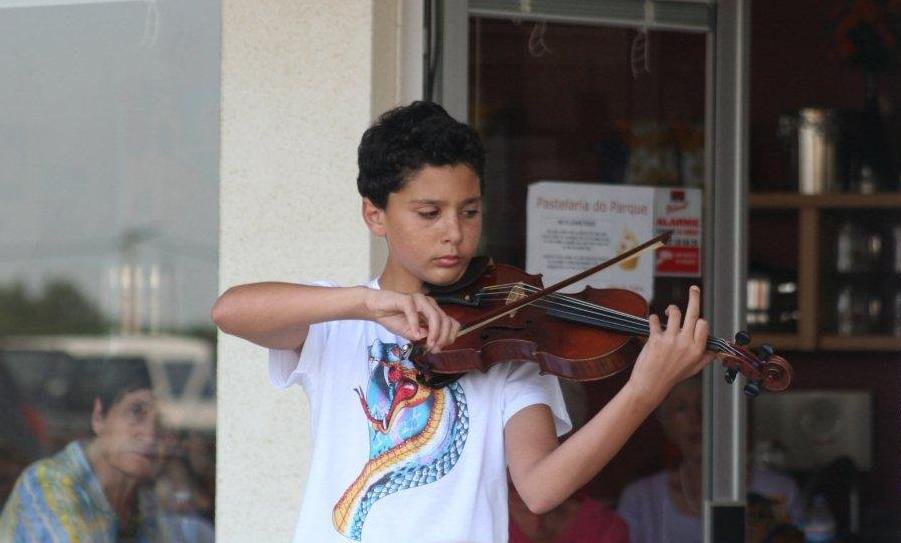
The early evening concert on June 30 featured not just a selection of songs by the choir in Portuguese, Italian, English, Irish, Yiddish and African, but a wonderful solo by the amazing 13 year-old violin prodigy Zé Nuno.

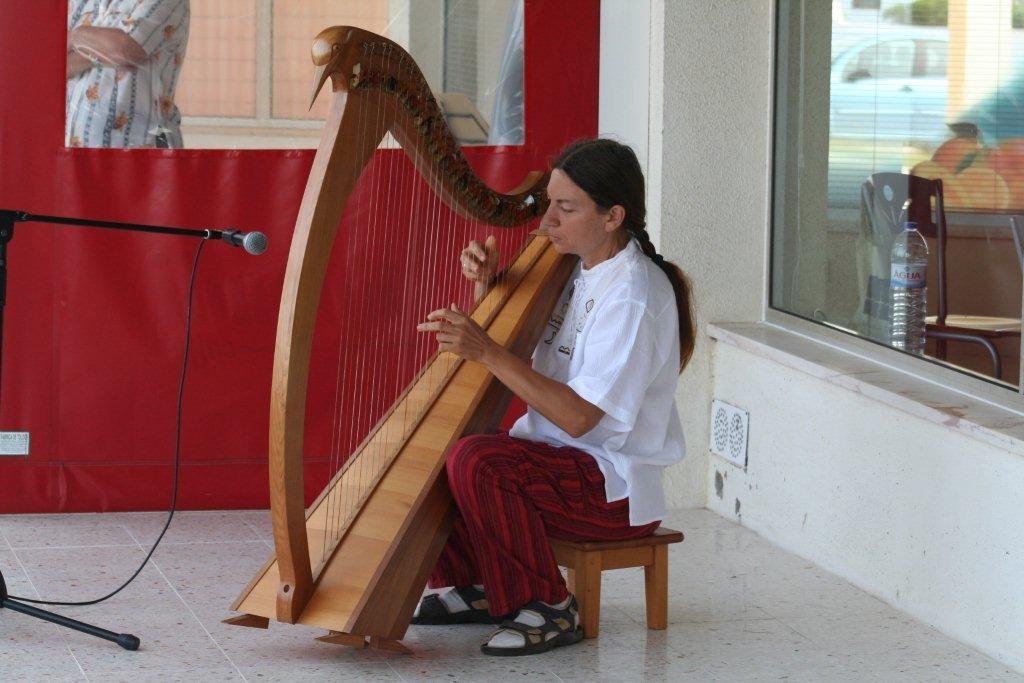
Other soloists included co-founder Uwe Zelinsky on cello and harpist Annette Gerken.

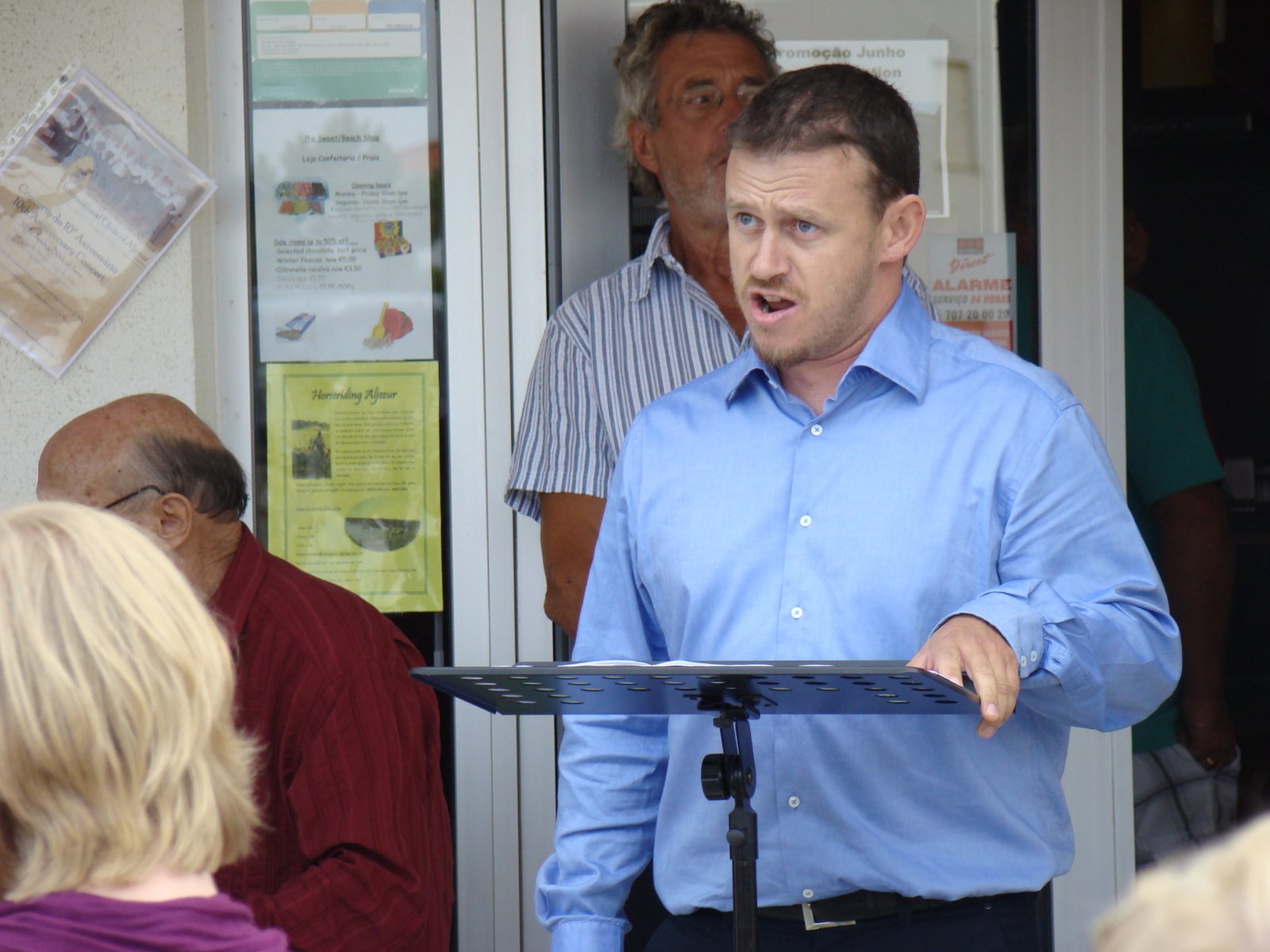
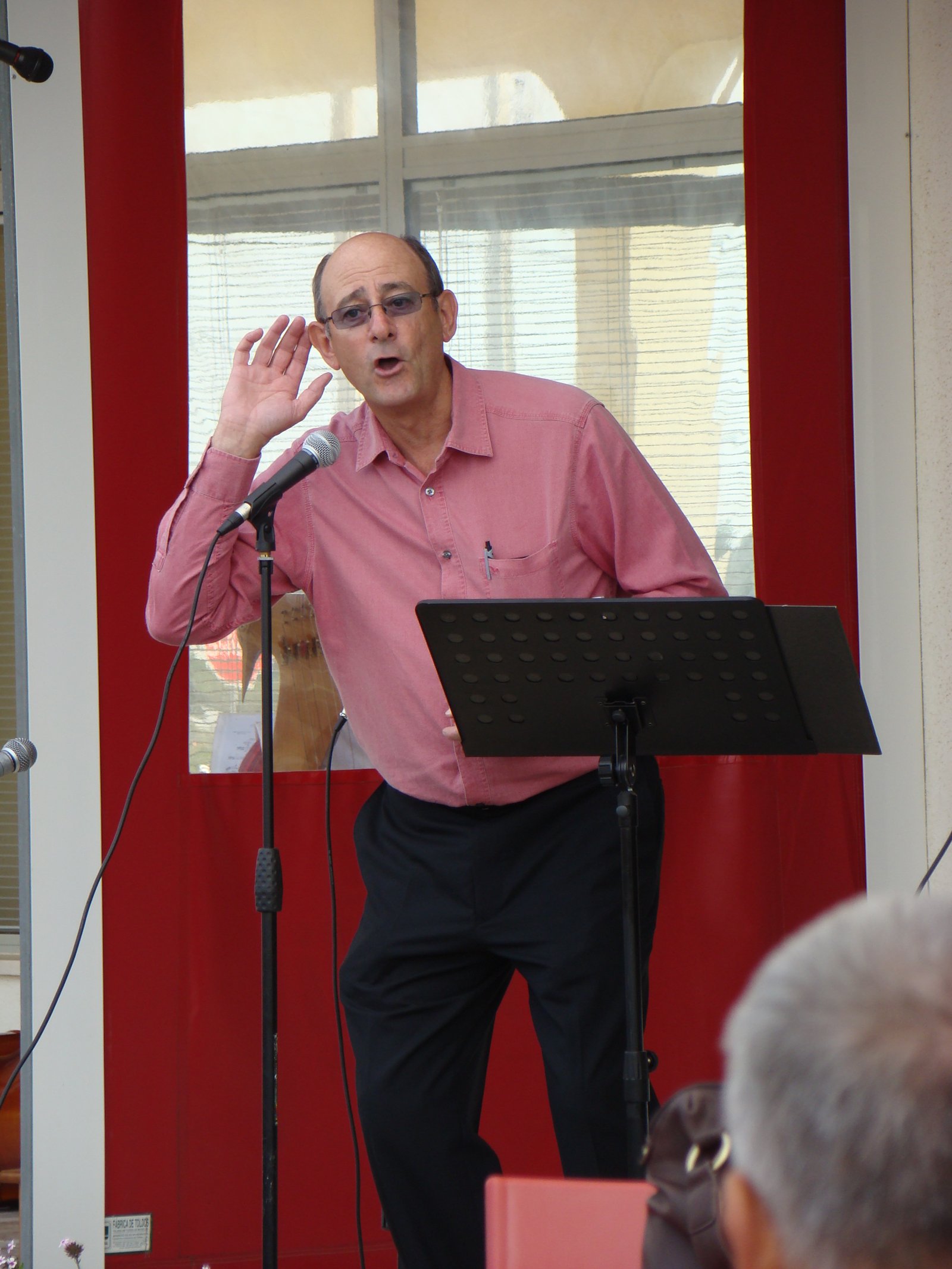
The choir’s young conductor Francisco Brazão, who has been with the Coro International Aljezur for less than a year—during which time it has come on in leaps and bounds under his stewardship—also sang a few solos in his wonderful baritone voice.

One member of the audience remarked to Brazão afterwards: “That was the best I’ve ever heard the Choir sing, they were so together.”

During the concert Pastelaria customers donated €50 to the choir, which will be passed on to the Bombeiros Volunteros of Aljezur.

The concert, hosted by Nik and Kim of the Pastelaria, was sponsored by the Associação do Património Histórico e Arqueológico de Aljezur—the Association for the Defence of Historical and Archaeological Heritage of Aljezur—who hoped it would serve as a way of recruiting more volunteers to their membership of over 260 including individual and collective associates.

The crowd enjoying the Choir

It was also supported by Amovate through publicity and the loan of tables and chairs to the Pastelaria.

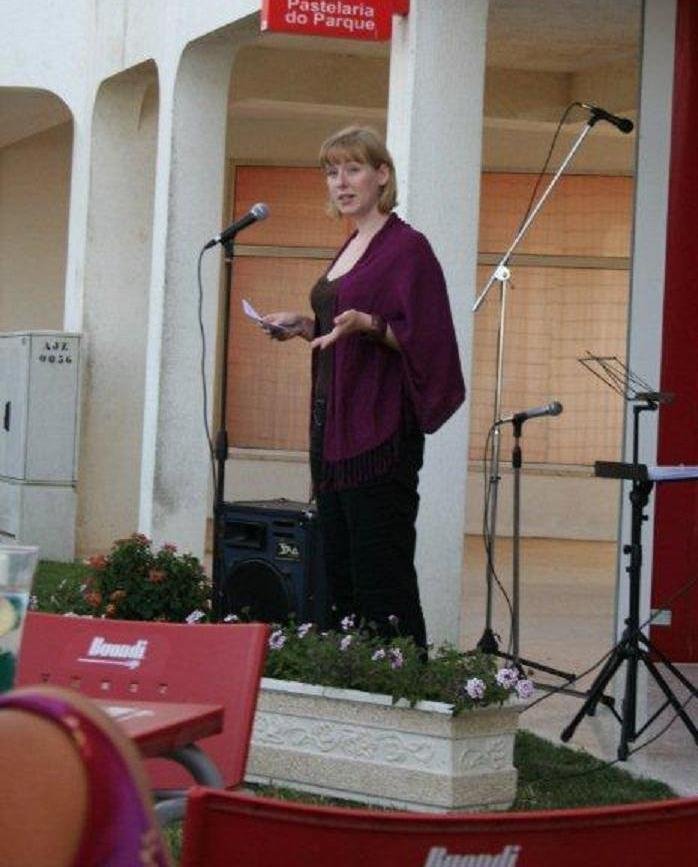
Swantje Suemer, ADPHA’s President/Chaiman, addressed the audience in Portuguese, English and German, saying:

“We hope our presence here makes more people aware of ADPHA and its importance in studying and preserving the cultural heritage in and around Aljezur.

“ADPHA is a non-profit association, founded on February 12th, 1996, with a membership now of over 260 including individual and collective associates.

“We are a recognized Public Utility Institution since 2003 and our objectives are the recovery of cultural identity and contribution to the development of Aljezur; Studying, promoting, raising awareness and defending its historical and cultural heritage through research, formation, treatment, restoration, etc.

“We collaborate with the local authorities and schools in cultural initiatives and maintain a specialized Library, a Documentation Centre and we are working on the Historical Archive.

“Also, we manage three of the four museums in the historic centre of the village, which integrate the Historic-cultural circuit, so we do guided tours through the museums and archaeological sites.

“These of course include archaeological excavations, in particular in Ribāt da Arrifana, the Islamic Silos by Barrada – Aljezur, the Medieval Cemetery in Aljezur, the Islamic Fishermen village by Carrapateira and the Islamic Tower in Odeceixe.

“If any of you would like to become involved with our work please drop into our office in Aljezur. Volunteers are always welcome.”

ADPHA can be contacted through:

Casa Museu José Cercas, which contains paintings and drawings of José Cercas, a painter born in Aljezur, and also features the works of other Portuguese artists. It also contains furniture, religious pieces and ceramics.

Rua do Castelo

8670 – 075 Aljezur

Tel: 282 991 011

e-mail:

adpha@sapo.pt

**The choir are holding another Concert promoted by ADPHA at the Igreja Nova, Aljezur during October, on a date yet to be confirmed.

See a selection of photos taken during the concert:

Aljezur Castle

Castelo de Aljezur

by Matt D’Arcy

Aljezur Castle was captured from the Moorish occupation in 1249 because an Arab girl fell in love with a Christian soldier and betrayed her people.

So the legend goes—and more of that later.

What is without dispute is that this fortress, whose ruins still stand in their dominant position on the heights above the town, played a pivotal role in a hugely important period of Portuguese history.

It is said to be one of the most impressive castles in the Algarve, with great regional importance, yet is simultaneously one of the least known national strongholds.

The flag of Portugal, whose current design was adopted on June 30, 1911, shows seven golden castles, one of which is claimed to be the fortress of Aljezur.

The seven castles are traditionally considered a symbol of the Portuguese victories over their Moorish enemies under Afonso III, who supposedly captured seven enemy fortresses in the course of his conquest of the Algarve in 1249.

Yet, this is nothing more than popular belief because this king did not have seven castles on his banner, rather an unspecified number up to 16!

But it is known that the red border featuring the seven golden castles on ancient versions of the flag was introduced to mark the extension of Portugal’s territory to include the Algarve.

The castles were first introduced to the flag around 1253 and do, indeed, represent the castles taken from the Moors in Algarve.

One theory states the castles reflect the fact that Afonso lll, the king who placed them in the flag, was son of Urraca, a Castilan princess—he also took a Castilian princess for his second wife—as the castles were a symbol of the Castilian royal family, their arms consisting of a golden castle on a red field.

Their number has been changed with the evolution of the flag. Some reconstructions display 16 castles, a number which changed to nine in 1385, and only in 1485 did it definitively become seven.

Because of those changes, historians don’t always agree on which castles are actually represented in the flag, as the Portuguese conquered well over seven castles during the Algarve campaigns.

Some suggestions include Albufeira, Aljezur, Cacela, Castro Marim, Estombar, Faro, Loulé, Paderne, Porches and Sagres.

But Aljezur Castle was certainly highly significant at the time of those final campaigns against the occupiers from North Africa, as it was the last fortress on the Algarve to be captured from the Moors.

So, it is more than reasonable to expect it to be one of the seven shown on the flag.

The site of the fortress has been occupied since the Iron Age, but the castle itself is a Moorish fort from the 10th century and is still an imposing edifice, dominating this small west coast town.

In that period the Moors occupied the southern part of Portugal, an area which they called “Garb Al Andaluz” (eventually becoming The Algarve), and the castle was built to guard the ancient river port that once provided direct access to the sea.

The origins of the fort, however, date from well before the Islamic period.

Excavations conducted there by Carlos Tavares da Silva showed levels of occupancy of the Bronze and Iron Ages, which testifies to the importance of this hill for the successive peoples who inhabited this southwest corner of Portugal.

In fact, archaeological discoveries have confirmed that humans had settlements in the area at about 4,000 BC.

Origins of the Castle

But at the time the fortress was built the Moors controlled Algarve (meaning ‘the west’) and Aljezur (‘the bridges’) until it was conquered by the Portuguese—led by Dom Paio Peres Correia—in the 13th century.

Although the municipality covers some 32,065 hectares along the Algarve’s west coast Aljezur itself is a small market town of two parts, the old village and the new, divided by a fertile river valley. The once-navigable river, which brought fishermen directly into the town from the Atlantic, is now silted up.

The older part, dating back beyond the 10th Century is located next to the river and winds up the hill to the remains of the castle on its highest point. In fact, some historians suggest the castle itself was the original fortified town of Aljezur, dating from the 8th Century.

From the high point of the castle, whitewashed buildings cascade down the hillside and at the bottom is the river, with the road across the bridge leading to the east and the newer part of the village, Igreja Nova.

This was built in the 18th Century after Aljezur suffered terrible destruction during the great earthquake of 1755, which all but destroyed Lisbon and towns all close to the coastline south from the Capital.

Fishing and agriculture were the main economic industries in the coastal areas and countryside surrounding Aljezur. So overflowing was the produce that the farm products were shipped to the market via the port up the Aljezur creek.

Over time and partly, it is thought, due to the huge movement of the earth shifting the river bed during the ’quake, siltation made the creek impassable to barges or boats.

The earthquake brought much destruction and disease to Aljezur and in the 18th century, the old town was infested with malaria.

To assist the people in this grave epidemic of the time, the Bishop of Algarve, Dom Francisco Gomes de Avelar, ordered the construction of the new town, called Igreja Nova, in order to escape the deadly consequence of the disease which resulted in numerous deaths.

Despite these efforts, many of the residents stayed in their old homes, eventually creating the two halves of the municipality known as Aljezur.

The sheer majesty of the castle, despite it having been abandoned in the 15th century, had dominated this region for almost 700 years, until it was badly damaged in the earthquake.

But much of the outer wall remains, a walled area that comprised a courtyard, two main towers, one round and one square, several residential structures, as well as two grain silos plus a covered cistern with a vaulted roof.

In 1249, with the final conquest of the Algarve, the castle passed into the possession of the Portuguese king, Afonso lll, and in 1280, the town received its Royal Charter from the reigning King Dinis.

In 1504 King Manuel revised the Charter by awarding the town the title “Noble and Honourable.”

Documents dating from 1448 suggest that the castle was now in ruins having lost its military function, and with the strategic importance of the town having been devalued.

The Order of Santiago tried to carry out some degree of reconstruction, building, it is said, new houses which were constructed in the castle on top of the Moorish foundations. These buildings kept to the basic layout, but now butted directly onto the walls covering the Arabic walkway which had previously lain around the inner circumference.

But three centuries later, the 1755 earthquake ruined much of the town, destroying with it a significant part of the castle, including the residential enclosure.

As we said at the outset some legends exist concerning Aljezur Castle, one of them being that it was overrun by the Portuguese at dawn on 24th June, 1249 because of an act of betrayal brought about by love.

The timing is why Our Lady of Alva–Nossa Senhora da Alva (Our Lady of The Dawn)—is the patron saint of Aljezur, commemorated by a fine 18th century statue in the main Igreja Nova church and probably taken from the previous town church, Misericórdia Church, which was destroyed in the earthquake.

The aforementioned cistern is associated with this claim as it connects to the Fonte de Mentiras—“Liar´s spring” –which lies below the castle, so called because the legend tells that the castle fell when a Moorish girl who loved a Christian man betrayed her people and allowed him access.

A more likely version of this legend is that a maid might have prevented the capture, but mistook the attacking knights for Moorish defenders and failed to raise the alarm.

Contemporary accounts from the 16th through to the 19th centuries talk of the Castle’s antiquity and decay.

But in recent years the ruins have undergone some restoration, and further general improvements to the surrounding area have made it into a pleasant walk, or an easy drive through the village and up to the castle.

The new information boards provide a great deal of information, but remember—take your camera!

The Castle offers fantastic stunning panoramic views of the surrounding countryside in one of Portugal’s most beautiful National Parks, from the Monchique mountains to the east, to the Atlantic in the west.

There are no entrance charges and there is limited free parking.