Category Archives: News

Susan & Brian’s Arabian Nights – Part 3

By Matt D’Arcy


Part 3

Susan’s next e-mail was dated January 22 2012, and she reported:

“Our excursions since our last message are better than fantastic.

“Again we were sorry to leave such lovely hospitality; we leave with two rugs made by local ladies.

“We now have a long drive to Beni Mellal. It takes us all day as the roads are so terrible we average only 30km an hour. We pass through dramatic scenery and more very poor villages, often ‘off piste’ (no real road).

“When we arrive in Beni Mellal we decide to stay and have dinner in a roadside café, and they let us camp free. We have really only come here for supplies before re-visiting the Atlas.

Susan & Sofie In The High Atlas

“And wonder of wonders, a French supermarket is here, so we stock up on wine, gin and goodies. At 12 noon only on Saturday there are just two cars in the car park at the supermarket and about six customers inside.

“No wonder Tesco aren’t here.

“We get the van washed and off we go, en route for Bin-el-Ouidane, a nice wiggly drive. We find a nice camp site, cold showers of course but the French proprietor lets us go into his house and shower—so long as we do it together. Typical French!

“We have a quiet night, just us and a Swiss couple and next morning we go looking for caves. Walk about 5 miles and find the caves, and find they are caves people used to live in.

“We are on the banks of the largest reservoir in Morocco and when it was built around 1950, flooding the valley the cave dwellers had to move. So the only way to the caves now is by kayak.

At The Cascades d'Ouzoud

“Back on the road after a nice day of walking we arrive at Cascades d’ Ouzoud where we check into a nice campsite, great showers and toilets. You get obsessed with the toilets, if we meet anyone, which is rare, it is the main topic of conversation, and these are the best since leaving Tavira in Portugal.”

On the following day Susan and Brian head for the nearby waterfalls, hoping to see some Barbary Apes.

Susan reported: “The Great Waterfall drops 450ft.There is not such a lot of water but it is very dramatic. We get away from the few Moroccan tourists here and go to the other side of the gorge and sure enough a family of apes approaches.

“They are really old African primates, a whole family all taking an interest in Sophie; mum, dad, and two babies. We get so close and get some lovely pictures.

Barbary Apes at Cascades d'Ouzoud

“Next morning we head for Demnate and then Imi-N-If rim to see the biggest stone bridge in North Africa. It is a huge cave collapse, and two roads run over the top of it.

“We both go down the approach, which is about 200 steps, but the river is too slippery for me, so Sofie and I return to the top and down the other side to see Brian emerge from the Arch, which is massive.”

After this experience Susan and Brian then had a six-hour drive to Skoura, taking them over the High Atlas for the second time.

Susan recalled: “The scenery is fantastic, but the same can’t be said of the roads and it takes us the six hours to drive 60 miles. It was a gruelling drive but really worth it through deep ravines and high mountains, passing beneath one of the highest peaks, at 13,000 ft.

“We go from almond groves, to shale and then black limestone before arriving once again in the scrub desert. For about 20 miles on the topmost passes we see no houses or people.

“Brian has seen the mountain weather is changing so we have to get over before the snow and he is right! The next day sees it snowing heavily and we can see it from Skoura in the desert.

“The next morning we experience our first sandstorm and it is so cold, we walk around a local palmery absolutely frozen, and visit about 10 old Kasbahs, some dating back to the 16th century.

“We stay put here for 2 days sheltering in the motorhome from the cold. It makes us think about peoples’ myths about Morocco.

“We have never felt threatened or unsafe even at night and we leave the van here in all sorts of places which we would never do in Spain, knowing it will be safe.”

When they renew their journey Susan and Brian arrive in Ouarzate a small but upmarket town,

Said Susan: “We have one day walking around and buy another carpet, then we continue on to Ait-Ben-Haddou.

Little Girl Carries Her Sister, in Agoudal

“This is Ridley Scott the film director’s favourite location. Any film requiring a medieval or Biblical-type scene, like Jerusalem, is filmed here; Gladiator, Jesus of Nazareth etc., as Israel no longer has places like this.

“But how sad is it that people are still living here in almost the same conditions as their ancestors, two millennia in the past.

“Yet people here live a long time. They drink no alcohol and there are no chemicals or additives in food. In the countryside it is not unusual for men to live to 110, 120.

“We expected this place to be very touristy which I imagine it is in summer. But now it is not so bad and we have encountered just a couple of Italian tour groups.

“After our visit we decide to head up to Telouet. We leave at 2pm to do 28 miles but at 6pm we are still eight miles short, and the road disintegrates into a mess of rubble. We have to turn around and return the way we have come.

“We park outside a remote guesthouse for the night. The owner takes us in for tea and almonds he tells us they have only had a tarmac road for a year and the villages here have no water or power in the houses.

“But the Gorges here are fantastic and seeing the villages miles from anywhere with only foot access is just amazing.

“Next morning we go for a walk with Sofie into one of these villages and a young couple come to talk to us. They are laughing and interested in Sophie and an old lady arrives carrying a day-old calf.

“They take us to their home where the whole family comes to see us. They take us into their salon a room with three carpets, a plastic table with two seats from the rear of a car, which we are shown to.

“There are no windows and no electric, the room solely with natural light from the door.

Berber Family Who Welcomed Us Into Their Home For Tea

“The house is above three stables housing four cows and their calves. They show us the kitchen, which is a stove on the floor, and that’s it—no running water, no toilet.

“But they make us tea and are so welcoming, so hospitable. They ask us to take their pictures and give us an address in a town 30 miles away to send them to.

“We have a great two hours with them laughing and joking all in French.

“When we leave the mother, who is lovely, gives us a bag of shelled almonds weighing about 1 kilo.

“As these cost about £8 a kilo here we find this very emotional that a family who have no material possession whatsoever will share with us. As we leave they all say goodbye and wish us well.

“We ask their daughter to come to the van and we give her some fleeces and old leather trainers of mine. She is overwhelmed. The only thing the girl asks me for is an orange—very moving.

We leave our e-mail address so that one day they may be able to contact us, before we are on our way again heading due south to Tazenkht.

Susan’s next e-mail was dated February 25 2012, and she reported:

“We are back home in Portugal. Are we enjoying being back? YES. Very much!

How could we not be happy to be home? After seeing the Atlantic Coast in Morocco there is no contest.

“Brian and I still maintain that this Coast (our coast) is the best in Europe.  “Let’s fly the flag for Vale Da Telha and our fabulous beaches!”

Sue’s final report on the last stages of their Arabian Nights adventure begins:

“After leaving the Middle Atlas we headed for Khenifa where there are more waterfalls at the Source –de-I’oum-er-Riba. It is nice and quiet, just a few local children.

“I make them cheese sandwiches and they are so grateful, and we also donate Sophie’s tennis ball as they only have a plastic bottle to play with.

“After a walk we set off to Ain Leuh but for the second time this holiday we have to retrace our steps, this time because of snow.

“We have to detour 40 miles and at one point Brian tried reversing up a hill but no go.

“So back we go and finish up in Azrou—blimey was it cold!

“We wanted to see the town but as it was -1 at 5pm we decide to sit tight and keep warm.

“Next morning we set off for Ifrane, which is about 5 miles from Mischliffen, the main ski area for the Middle Atlas Mountains but we don’t make it due to the snow.

“Ifrane is weird, very un-Moroccan, a town of pavements, fountains, no rubbish—just bizarre. There are lots of Moroccans day tripping to see the snow.

Fantasia Festival, Mekenes

“We continue to El Haheb and on to Meknes, but on the way through we see lots of activity on the edge of the town with hundreds of people gathering on the edge of a large green area.

“When we investigate we are told it is a ‘Fantasia’, an exhibition of horses, all dressed in either Arab colours, red, or green for Berbers, whilst the riders carry flintlock muskets.

“About 20 horses race in a line, and at the end of the chase the riders all fire the rifles. There were hundreds of horses and riders racing in lines about every eight minutes. We couldn’t work out the ceremony but the crowd loved it.”

After they enjoyed this uniquely local event, Susan and Brian camped near Meknes, before heading for Moulay Bousselham a small town next to a lagoon on the Atlantic coast.

Susan wrote: “We see thousands of flamingos heading north as arrive at this pleasant small town with a good beach and great outside fish market.

“We wake to cloudy skies, so we head north for Larache a larger town, take a look around and move on up country to Ichmil.

“Here, we camp at the Port, a nice walled town with no hassle. We find Moroccan-style fish and chips, but how we could have done with a beer to wash it down!

“Finally, the next morning, with no plans as usual, we turn to each other and say, ‘let’s go home’.

“We both felt it at was time—the North had nothing for us and with hindsight we should have stayed in the southern desert area a lot longer.

“But there is always another year.

“So, we head for Ceuta and our return ferry, land in Spain and head quickly for Portugal, spending a pleasant night in Tavira at one of our favourite Indian Restaurants with lots of cold beer and a bottle of Touriga National Ermalinda wine.

“It’s great to be home.”

Susan’s Summary…

“We have had a truly memorable time, made even better by the people we met, the truly magnificent scenery and the diversity of Morocco—sand, snow, heat and cold.

“Largely Morocco has no infrastructure and no education so big problems are being stored for the future.

“To see the real Morocco it is always necessary to be at least two hours’ drive from tourist areas.  Eventually, we stopped looking at our Rough Guide and only visited towns not in a guide books.

“This country is changing fast and the government hope to have everyone connected to the mains electricity within two years. Even in the desert drilling rigs were everywhere, towns have grants to help them provide water for growing so they can feed themselves better.

“We visited many rural villages and towns with no running water, no sewerage who have just got electricity and now want satellite TV!

“You see satellite dishes appearing in the most remote areas.

“Teenagers in the north all wear western clothes and in the south second hand clothes markets are everywhere. Secondhand anything is big business for all the poorer people.

“With the TV and visitors youngsters see what we in Europe have and naturally they want it too.  What as a nation they don’t want is to change is their mental, mind-set.

“We feel that Muslims and the Koran are not compatible with the 21st Century.

“Women in rural towns (Berbers) are not permitted by their husbands to work in case they come in contact with another man in the workplace, so all jobs are done by men.

“Women are responsible for children, gardens, household chores, making bread and collecting wood.  This is changing in the cities, but slowly.

“So that’s it. I wrote every day in my diary about our experiences, and have much more. So if you want to know anything, just ask.”


~~~~~~~~~~~~~~~~~~~~~~~~~~~~~~~~~~~~~~


Vale da Telha Golf Society 2012

Having started in MID-YEAR 2011 the VDT Golf Society has grown to over 40 members.

From the initial development of the Society we have made contact and secured preferential prices from the following clubs: 

PENINA GOLF @ MERIDIAN ALVOR

MORGADO & ALAMOS  PORTIMAO

PESTANA GROUP ALTO, SILVES, GRAMACHO & PINTO

PARQUE da FLORESTA – BUDENS

ESPICHE GOLF – LAGOS (ESPICHE) 

The Society have organised specific GOLF DAYS FOR EVERY 2nd THURSDAY in each month. Details of these dates and the arranged process is sent out to all members every month. 

Anyone wishing to join for 2012 please contact RICK HURSTHOUSE on richard.hursthouse@sapo.pt  Membership costs €5 per year. 

Whether you are just starting out to play Golf or have not played for a few years we can help you get into playing on a regular basis and enjoy social Golf at affordable prices.

RLH JAN 2012

Postcard from Lisbon

From the BBC website

Postcard from Lisbon, Portugal

By Marina O’Loughlin, BBC Olive magazine

From the Travel section, posted in the Food & Drink sub-section.

Pictures courtesy of www.lisbon-tourist-guide.com

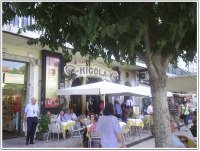
Lisbon Cafe

I don’t expect to fall in love with Lisbon but I fall as hard as a swooning Regency heroine. This compact, decoratively crumbling city has the lot: swooping views down to the sea, evocative architecture and, most importantly for me, a thriving bar and restaurant scene.

Our hotel is the Tivoli Lisboa on the stately Avenida da Liberdade. At first its blocky exterior isn’t rocking my world, but it grows on us in a big way. The hotel’s Sixties look is rather groovy, baby; the sprawling lobby bar makes you feel like you’re in an episode of The Avengers. And amenities are 100% 21st century.

Terraço, the hotel restaurant, is a serious destination in its own right – the eponymous terrace is a magnet for the city’s beautiful people. Chef Adelaide Fonseca fuses traditional Portuguese recipes with contemporary flair: our meal is stunning, from delicately fried fish – reminding us it was the Portuguese who introduced tempura to Japan – to cataplana, the famous fish stew popular on the Algarve, dotted with coriander and fish-stuffed ravioli, to a reinvention of sericaia, a fluffy, meringue-y hybrid of soufflé and sweet omelette.

Lisboetas have an unashamedly sweet tooth – just think of the famous custard tarts. There are a couple of justifiably

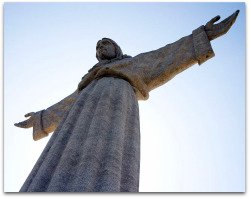
Monument of Christ the King

renowned cafés in the centre of town but they’re on every tourist’s radar. We’re headed to the business district of Saldanha and Café Versailles (Av. da Republica 15, 00351 21 354 6340). Excuse me while I catch my breath; this is the most beautiful Art Nouveau café I’ve ever seen –Paris, eat your heart out. Vast, wood-panelled, mirrored and many-chandeliered, with formally attired waiters and acres of twinkling cabinets groaning with every cake you’ve ever imagined; it’s jaw-droppingly lovely. We have been warned that theLisbonwaiter default mode is grouchy, but they couldn’t be more heavenly. Nor could the thick hot chocolate, muffiny queques, and pastéis de nata either.

Célia Pedroso and Lucy Pepper, authors of the newly published Eat Portugal, take us to Ramiro, a seafood lover’s fetish parlour, every surface piled with sea creatures and a basement rammed with tanks where crabs blow leisurely bubbles until it’s time to meet their fate. I’m a huge fan of Portuguese wine anyway but it truly comes into its own when served with mountains of langoustines, oysters, salt cod croquettes, clams, sizzling, garlicky prawns, an oddly mean steak sandwich, and ripe, silky Portuguese cured ham.

Considerably more upscale is Tavares. This is Belle Epoque at its most gilded, making Café Versailles look positively minimalist. It’s like eating inside a jewellery box. The Michelin-starred chef clearly decided his cooking should match the sensory overload of the surroundings: if there’s a ludicrous spin on a traditional dish, he’s there – dehydration, spherification and miniaturisation a go-go. He’s now moved on; I do hope the latest incumbent lets the surroundings and quality of the ingredients tell their own story.

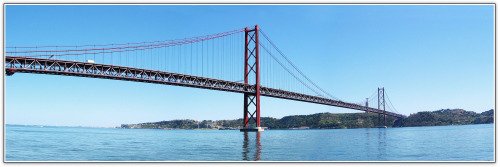
Lisbon bridge - Ponte 25 de Abril

Like they do at Restaurante Solar dos Nunes. When we arrive for dinner, one exclusively male table is just finishing lunch and taking receipt of what appear to be minihamburger petit fours. Oh, yes please. There’s nothing foofy, just vast amounts of rustic, Alentejo-accented food: ham and whole, oozing sheep’s milk cheeses while you look at the menu; a steaming cast-iron cauldron of pap açorda – like a collision between bread sauce, Tuscan panzanella and Mediterranean fish stew; game birds and hunks of beef.

I think it’s against the law – and if not it should be – to leave Lisbon without a visit to Pastéis de Belém, near the Jerónimos monastery. Here in this cool, traditionally tiled interior, the pastel de nata reaches its apotheosis. Pretentious? Maybe. But I’m prepared to bet it’s the best custard tart anyone has ever tasted.

There’s so much more to love inLisbon. I love the vintage wooden number 28 tram that takes you everywhere you’ll want to go (especially the evocative old Arab quarter, Alfama), guided by surly drivers, rattling along its tracks like some kind of emphysemic rollercoaster. I love the kiosks in the open spaces that sell Portuguese cheesecakes and recherché tinctures and cordials. And the wine bars, such as Chafariz do Vinho, that spring up in unlikely places like this old aqueduct with its miles of subterranean tunnels. Or the psychedelic dream interior of Pavilhão Chines.

And I adore the ginjinha purveyors, teeny holes-in-the-wall that cluster round the main squares selling powerful cherry aguardente totally unique to Lisbon.

You ask for it ‘with’ or ‘without’ – cherries, of course – and nobody bats an eyelid if you neck a few first thing in the morning. I can’t believe it’s taken me so long to get around to this enchanting city. But I’m so, so coming back.

Meeting at Centro de Saude

Amovate is told:

“Nobody will be without a doctor.”

Amovate President Peter Johnson, General Assembly Vice-President Maria Franca and Matt D’Arcy, responsible for Press and Public Relations, have held a meeting with a senior official at the Health Centre in Aljezur to clarify a number of concerns among the ex-pat community.

We met with Dr Dulce Moreno, head of the Public Health department, to ask about changes not only at the Clinic, but also nationally by the Ministry of Health, and to discuss how those changes will affect the community.

We also wanted to bring to their attention concerns raised by members and residents about the lack of Family GPs at the Centre, making it difficult for people to make appointments or to see a doctor locally, avoiding journeys to Portimão orLagos.

Dra Dulce first assured us that she would be available, by appointment, to members of the community every Monday afternoon to discuss any issues they wish to raise regarding the Health Centre and their treatment there.

Although she doesn’t speak English she, like all the staff at the Health Centre, now has computer access to a translation website and this is now available at all consultations where there is a language problem.

Naturally, anyone not speaking Portuguese may still find it preferable to have a translator with them, where possible. But at least the computer solution is a significant step forward.

She also said she was quite happy for Amovate to communicate with her regularly via e-mail to discuss any issues raised by our members.

Between us we worked out a system by which members can e-mail their questions to Amovate and we will collect them together and draw up one general e-mail containing all those issues to send to Dra Dulce, who would reply directly to Amovate.

Then her communications would be posted on the Amovate website under a special Section headed Health Centre.

This would save the Health Centre being flooded with queries, many of which will almost certainly be duplicated, and channel everything through one simple medium.

As far as the question of availability of doctors is concerned she did say there was a shortage of medics on the Algarve, most especially here on the West Coast where it is not only difficult to attract doctors but even more difficult to get them to stay once they accept a position here.

As everyone knows the most recent departure is Dr Tiago Cruz, although Dr Anna and Dr Eduardo Carvajal remain at their posts.

However, the VERY good news is that from the beginning of February—Dra Dulce doesn’t yet know the exact date—three new doctors are arriving in Aljezur from Cuba….doctors who she assures us WILL remain at their jobs for the foreseeable future.

These new doctors, who all have some English, have signed minimum two-year contracts with the Health Centre and will live and work entirely in Aljezur, guaranteeing their presence on a daily basis.

And to pick up some of the slack on a temporary basis another doctor will be coming on duty at the Health Centre on Wednesdays, Thursdays and Fridays up to the end of the month to see—by appointment—patients who currently do not have a family doctor.

Dra Dulce assures us that, once the Cuban doctors arrive, all patients registered at the Health Centre will have their own family doctor.

“Nobody will be without a doctor,” was her reassuring promise.

On a national level the economic problems besetting Portugal are forcing some major changes within the country’s National Health Service.

You can get full information (including an English translation by clicking the Union Flag icon on the top right hand corner) on this website:

www.arsalgarve.min-saude.pt

Also, if you Google Portal da Saude you will be shown a list of websites all offering daily information relating to the Ministry of Health, although you may have to run these through Google’s translation software.

Using this service you can select the health centre you wish to visit, go to its web page and there you can find all the relevant information.

Maria will go through these websites to furnish us with a fuller idea of what relates to us in the next couple of days or so, but just to summarise, there will be some additional charges coming into effect for medical treatment.

Dra Dulce assures us that any exemptions you currently have on prescription charges, for example (i.e. diabetics etc) will continue to be honoured.

But there will be increased costs for consultations with your doctor, and for things like X-rays, scans etc.

Any person can apply to be exempt from doctors’ fees etc, by downloading and filling out the relevant form. You fill out all your details, including fiscal number etc, and the Health Ministry will establish if you are, indeed, exempt.

One other point raised by Dra Dulce:

She says ex-pats in Vale da Telha and the surrounding districts may not be aware that the Health Centre operates a free home care medical service for anyone who is housebound and in need of long-term medical attention.

These people will receive continuous medical treatment at home, via the services of a doctor, nurse, even a physiotherapist where necessary.

This service, available right across the Aljezur Camara, is restricted to medical services, not to cleaning etc.

So, if you know anyone who is housebound and not receiving medical care at home, please give their details to the Health Centre and that omission will be corrected.

Once Maria has finished accessing the various websites we hope to be able to give you additional information here regarding costs of treatment etc.

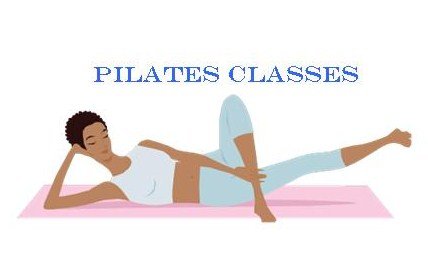
Pilates Classes

It is planned to hold Pilates Classes at the Old School House on the following days:

Tuesday at 12:30 h – 13:30 h & Thursday at 12:00 h – 13:00 h
If you are interested in joining the class, please contact Zária by e mail at        rosariamanuel@hotmail.com


Pilates is a form of exercise, developed by Joseph Pilates, which emphasizes the balanced development of the body through core strength, flexibility, and awareness in order to support efficient, graceful movement.

Athletes and dancers love it, as do seniors, women rebounding from pregnancy, and people who at various stages of physical rehabilitation.

Modification is the key to Pilates exercise success with a variety of populations. All exercises are developed with modifications that can make a workout safe and challenging for a person at any level.

Benefits of Pilates

Pilates is a body conditioning routine that helps build flexibility and long, lean muscles, strength and endurance in the legs, abdominals, arms, hips, and back. It puts emphasis on spinal and pelvic alignment, breathing to relieve stress and allow adequate oxygen flow to muscles, developing a strong core or center (tones abdominals while strengthening the back), and improving coordination and balance. Pilates’ flexible system allows for different exercises to be modified in range of difficulty from beginning to advanced. Intensity can be increased over time as the body conditions and adapts to the exercises. No muscle group is under or over trained.