











 Vale da Telha is next month hosting a major Boules tournament and Festival spread over three days.
This prestigious tournament, hosted by the Petanca Associação of Vale da Telha, is expected to attract around 250 players from right across the Algarve, competing for one of the sport’s most sought-after trophies.
The three-day Festival on the weekend of September 16, 17 and 18, will be centred on the wide expanse of land between the apartment blocks at the commercial centre, alongside the playground and the Pastelaria in the Parque.
The weekend begins at 5pm on Friday September 16th with the competitors gathering for sardines and bread, before being entertained from 7pm by the live music of Portuguese duo Nelson and Arménio.
Then, at 9pm, there will be the ceremonial cutting of the Anniversary cake, accompanied by sparkling wine before the music continues late into the night.
On Saturday the 17th the organisers are holding a mountain bike race, with competitor registration beginning at 8am and the race getting under way at 9am.
The racers will then attend an invitational lunch at 1pm followed at 2.30pm by traditional games including a mini-petanque tournament.
There will be a barbecue at 6pm, then, from 7pm, live music with the band Os Celtas.
The major petanque tournament then takes place on Sunday September 18th, the competition between teams from the APA and the APBSA beginning at 8.30am, followed by the trophy presentation.
We will supply more details as we get them from the organisers.
In the meantime here is a quick resume of the rules and methods of the game of boules, or petanque should any of you wish the follow the local players.

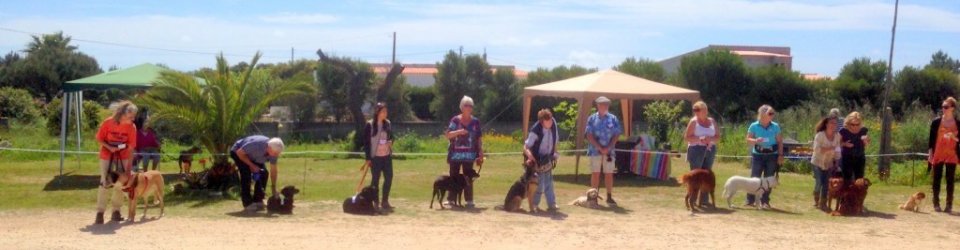
Petanca Competition held at Amovate in 2008
According to Wikipedia:
Boules (French pronunciation: bull) is a collective name for games played with metal balls.
Two of the most played boules games are pétanque and boule lyonnaise.
The aim of the game is to get large, heavy balls as close to the elusive ‘jack’ (i.e. ‘boobaloo’) as you can.
It is very popular especially in France, but also Portugal and Italy, where it may often be seen played in any open space in villages and towns. It is also similar to ‘bocce’ and ‘bowls’.
Brief rules of pétanque or boules
Size of teams, number of boules:
You can play the game with two teams of one, two or three players on each side. With teams of one or two, each player has 3 boules; with teams of 3, each has 2 boules.
Size of boules and cochonnet:
Boules should have a diameter of 7 to 8 centimetres (2.8 to 3.1 in), ideally made of steel, and weighing between 650 to 800 grams (1.4 to 1.8 lb). They should be marked so each player can tell which boules belong to them. The cochonnet should be made of wood, preferably beech wood, about 3 centimetres (1.2 in) in diameter.
Choosing the throwing place:
Toss a coin to choose which team plays first. Any player in this team chooses where to draw a circle on the ground in which every player will stand to throw their boules. The circle should be about 0.5m in diameter and at least 1m from any obstacle (wall, tree, edge of playing area, etc). Throwing the cochonnet he/she then throws the cochonnet between 4m and 8m, or 6 to 10 paces from the circle in any direction. It also must not be closer than 1m from any obstacle.
The first boule:

Petanca Competition held at Amovate in 2008
Any player from the first team then throws the first boule, trying to get it as close as possible to the “cochonnet” without touching it. Both feet must stay together on the ground and within the circle while throwing and until the boule has landed.
The other team
A player from the other team then steps into the circle and tries to place a boule closer to the cochonnet than their opponent, or to knock the opponent’s boule away. You must throw within 1 minute of your turn starting. The boule nearest to the cochonnet is said to be “holding the point”.
Who plays when:
The players in the team that is not “holding” continue throwing until they place a boule closest to the cochonnet, and so on. Players on the same team do not have to take alternate throws, but player must always play their own boules.
When one team has no more boules:
When a team has no more boules to be played, the players of the other team throw theirs and try to place them as close as possible to the cochonnet.
Counting the points
When both teams have no more boules, you stop and count up the points. The winning team scores one point for each boule nearer the cochonnet than the opponents closest. Only one team can score points in each round.
Starting the next round
A player from the team that has won throws the cochonnet from a new circle drawn round the cochonnet’s last position. The winners are the first team to reach 13 points (or whatever total is previously decided).